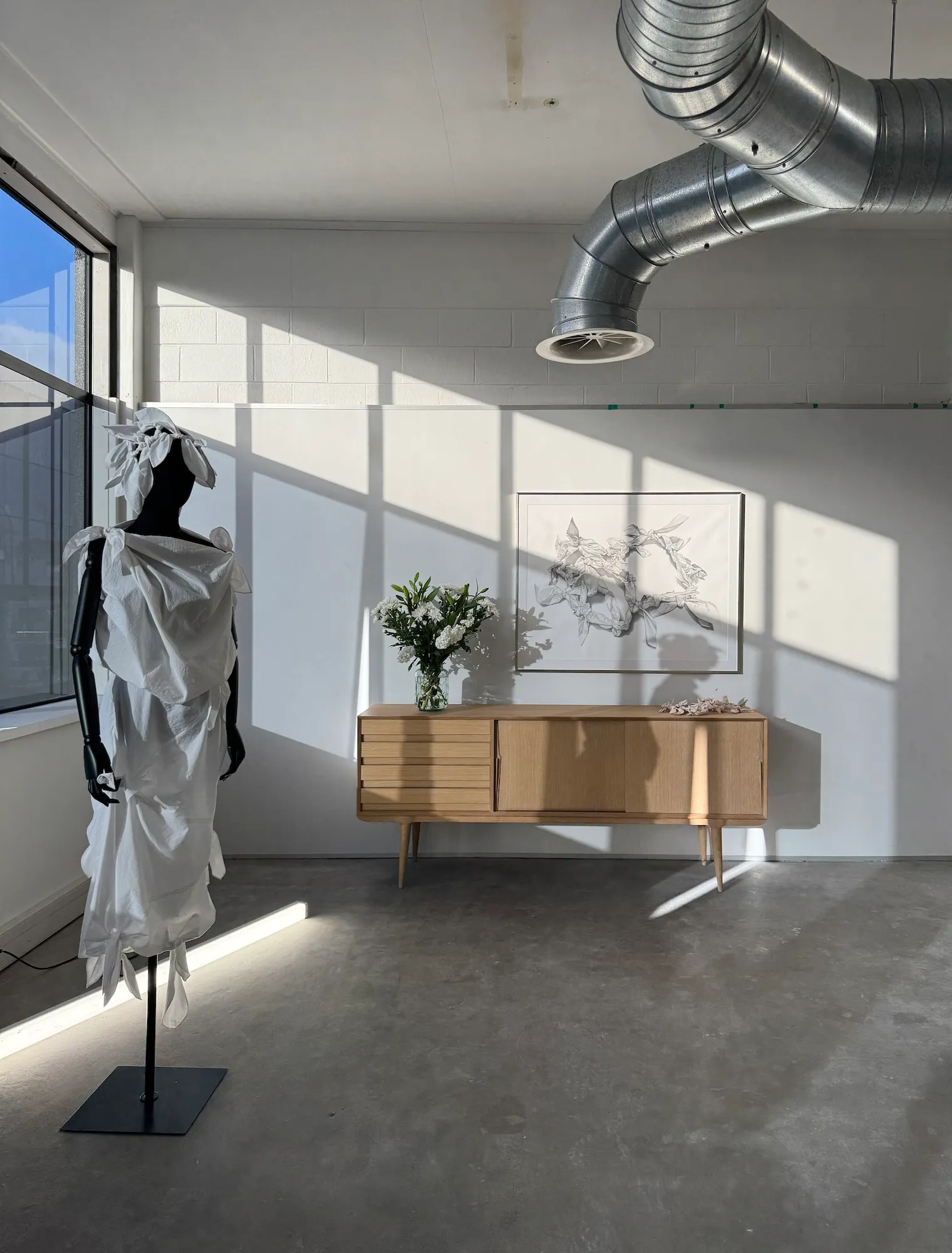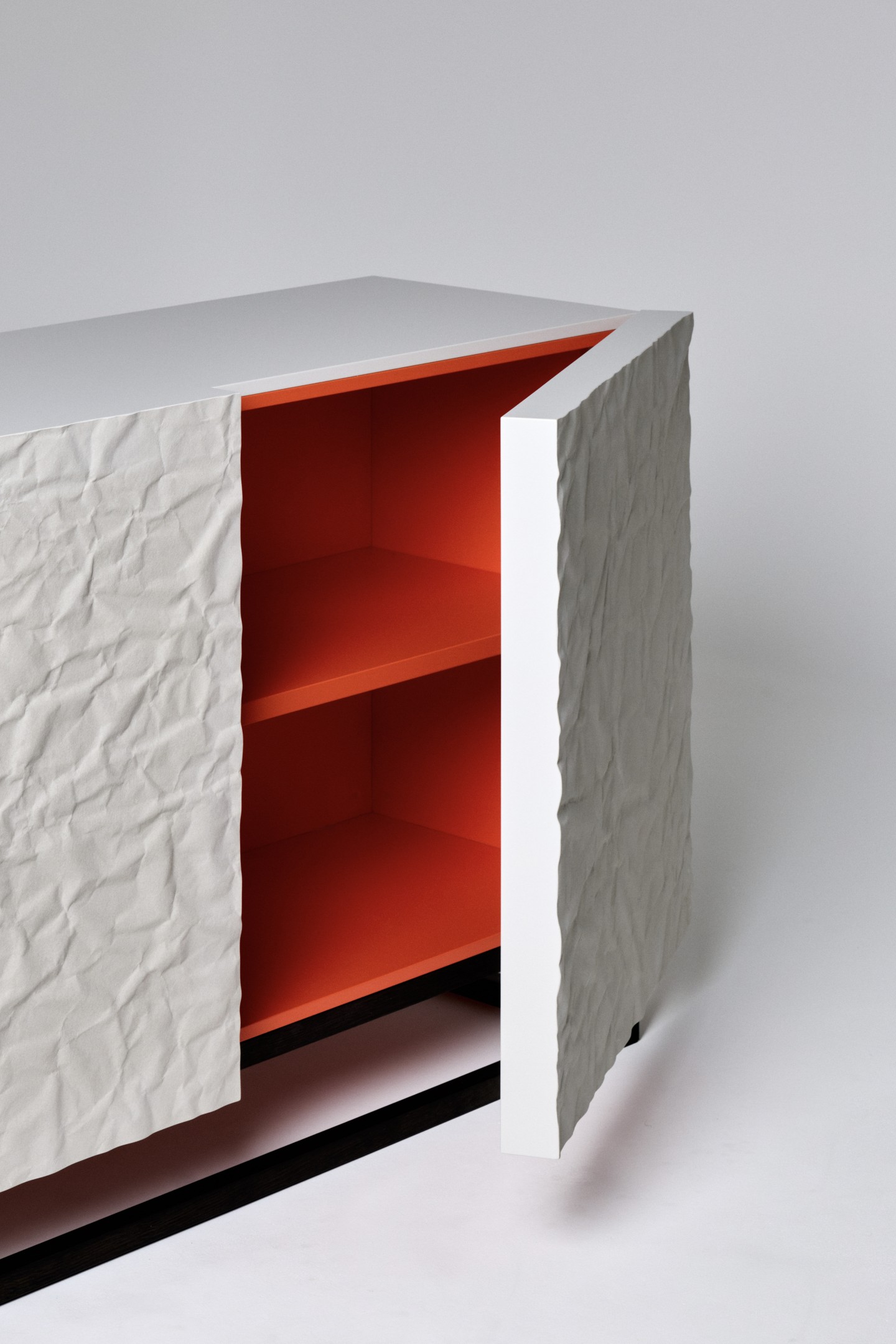
The crinkled surface of Paper I catches the light. A glimpse of orange is visible through the open door. Photography by Tim Williams.
What the cabinet keeps inside
Light catches the creases across the Paper I Sideboard as you walk past it. The material is imi-Paper, developed for interior wall cladding. Klaus brings it closer to hand by using it on the cabinet doors, where every fold is visible. An ebonised solid oak frame gives the white cabinet a dark line at floor level.
Open the sideboard and the orange lacquer runs through the interior and into a drawer divided for smaller objects. It’s a colour you encounter by using the cabinet.

Seen from above, the orange drawer shows how Klaus has divided it for everyday use. Photography by Robin Smith.
The orange only comes into view when you open the cabinet.
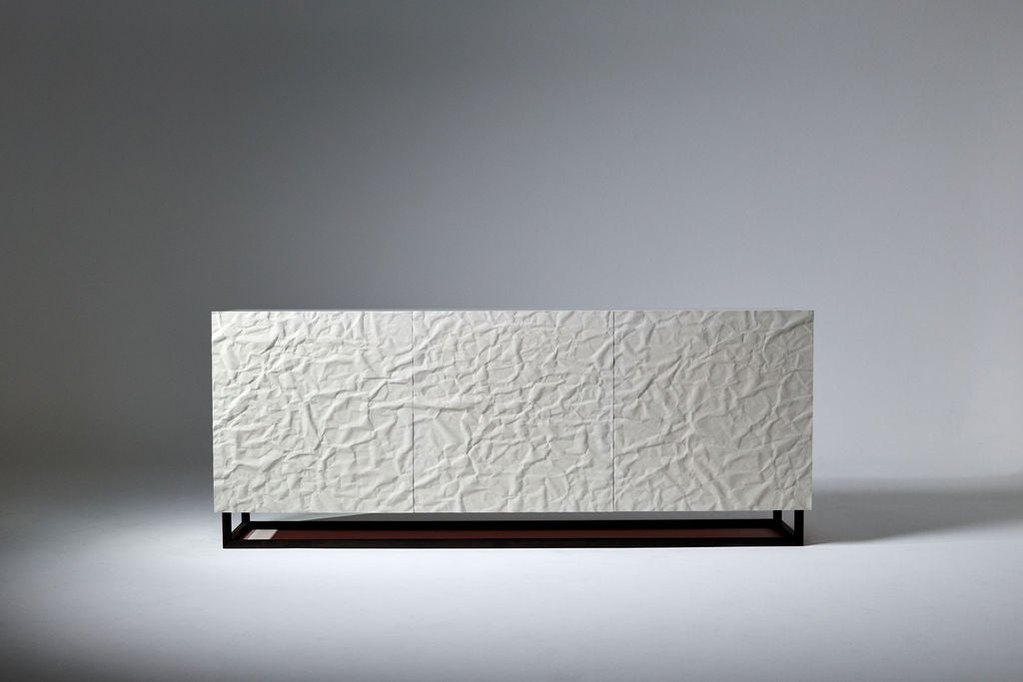
Paper I began with imi-Paper, a textured surface developed for wall cladding. Klaus Todt used it across the cabinet doors, where the creases catch the light. Open the doors and the white exterior gives way to bright orange lacquer, including a set of divided compartments. An ebonised solid oak frame sets the cabinet just above the floor.

What charring brings out in the wood
For the D-Light Coffee Table, Klaus adapts a Japanese timber-charring technique. He chars the solid oak, brushes the surface and finishes it with oil. What looks like a plain dark top from across the room shows the ridges of the oak grain up close. The ebonised frame beneath it follows an angular line of its own.
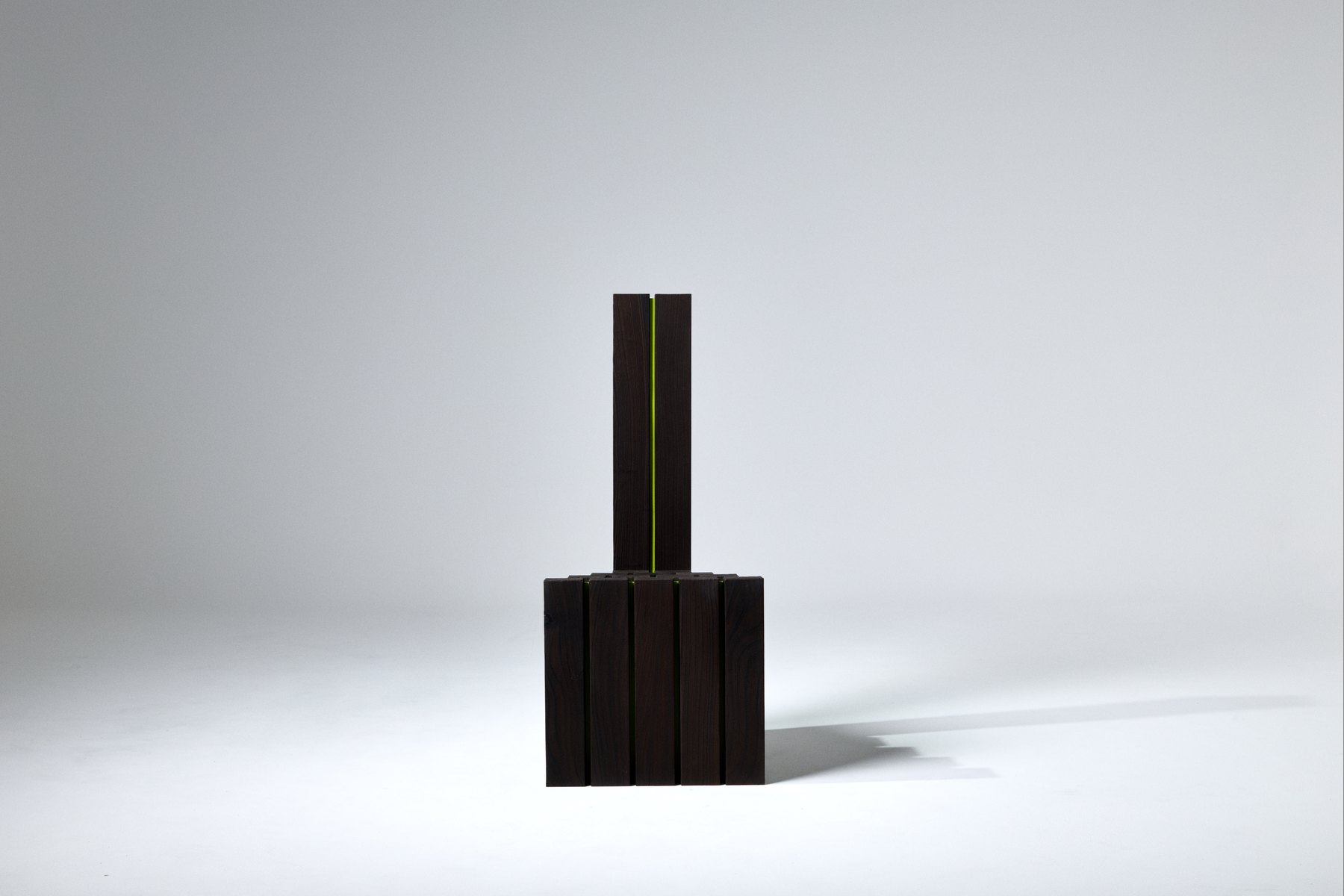
Klaus also chars macrocarpa for the Sixteen Pin Chair. The individual pins are separated by lime-green spacers. Follow that colour across the seat and you can see how the chair is put together.

Lime-green spacers trace the gaps between the charred macrocarpa pins on Sixteen Pin. Image courtesy of K.TODT Design.
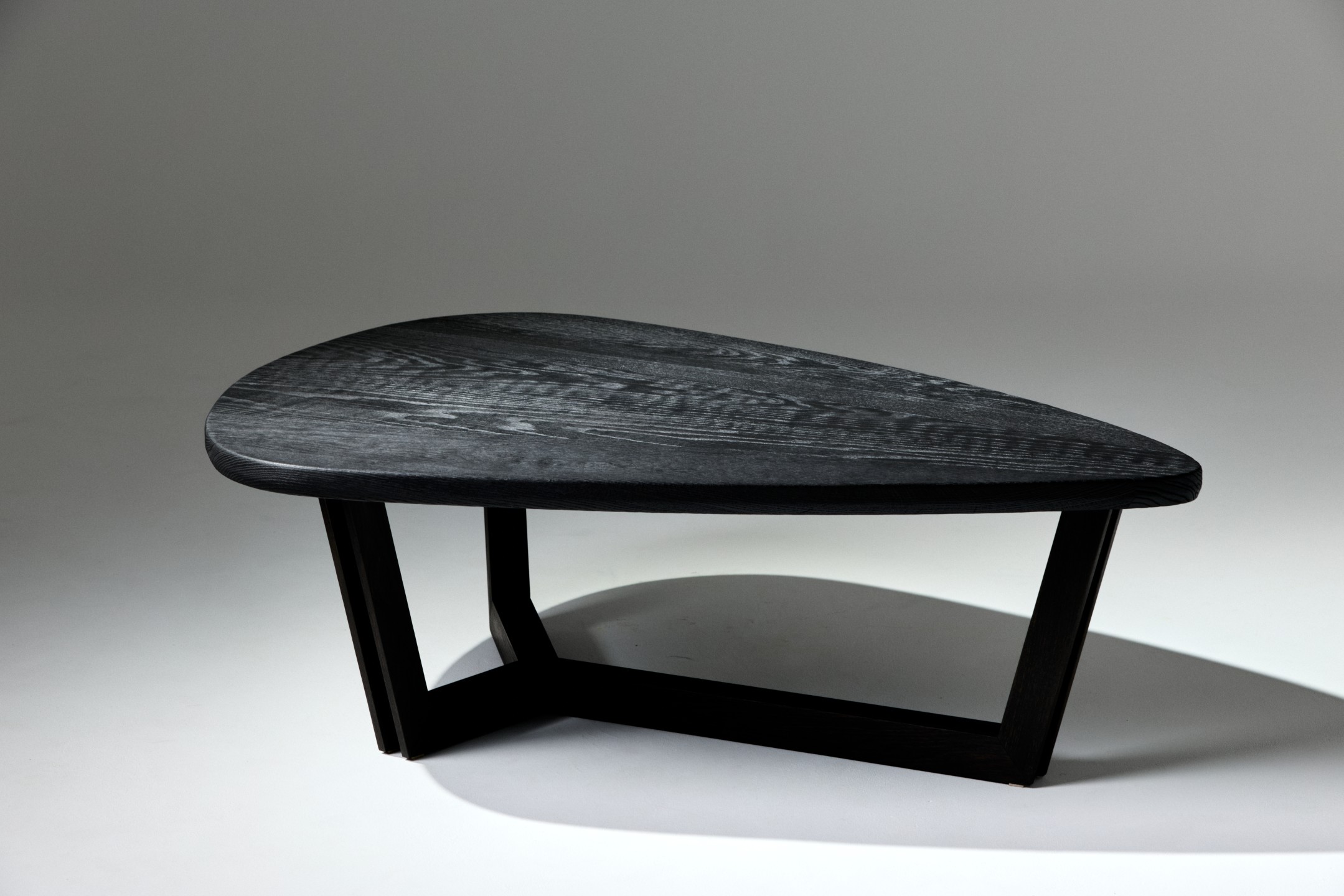
The rounded outline of D-Light’s charred oak top sits above the angles of its ebonised frame. Photography by Tim Williams.
Follow the lime green across the seat and you can see how the chair is put together.

Throne II, D-Light and Paper I on display together at Good Form. Photography by Robin Smith.

Pastel green and cream surfaces on the Talking Chairs at Good Form. Photography by Robin Smith.
What a few degrees can do
The Talking Chairs change character when you turn them. Their pastel backs can lean towards each other or angle away, depending on how you place the pair. Look down at the chairs and you can see how much of that effect comes from a simple change in angle.
The Mono Tilt leans five degrees sideways and backwards, while the top stays level for a book or a cup. It can sit beside a sofa, by a bed or under an object you want to put on display. The tilt is easiest to see as you walk around it.
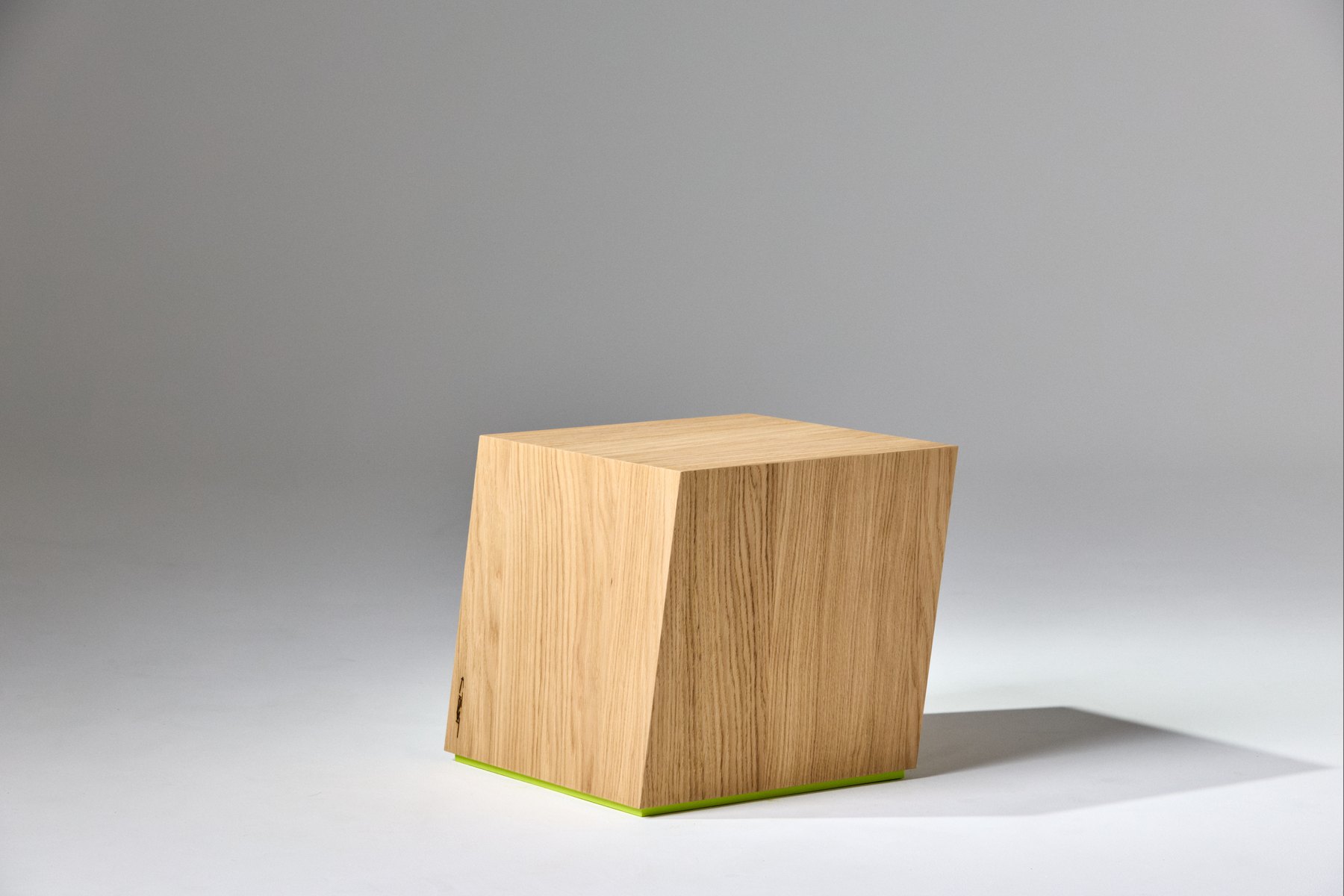
Mono Tilt shown in a light timber finish, one of several finishes in the series. Photography by Tim Williams.
The Talking Chairs change character when you turn them.
Meeting Klaus at Makers Market
At Makers Market Edition 3.0 in October, we could see the pieces together at full scale. The tall, dark Throne II Chair and the pale Talking Chairs show how differently Klaus handles the same basic idea of a seat. Robin Smith’s photographs record how those pieces sat among the people who came to see them.
Read more about Klaus Todt, explore the pieces from Collection 42, or see selected works at the Good Form gallery, 86 Newton Road, Eden Terrace, Auckland.
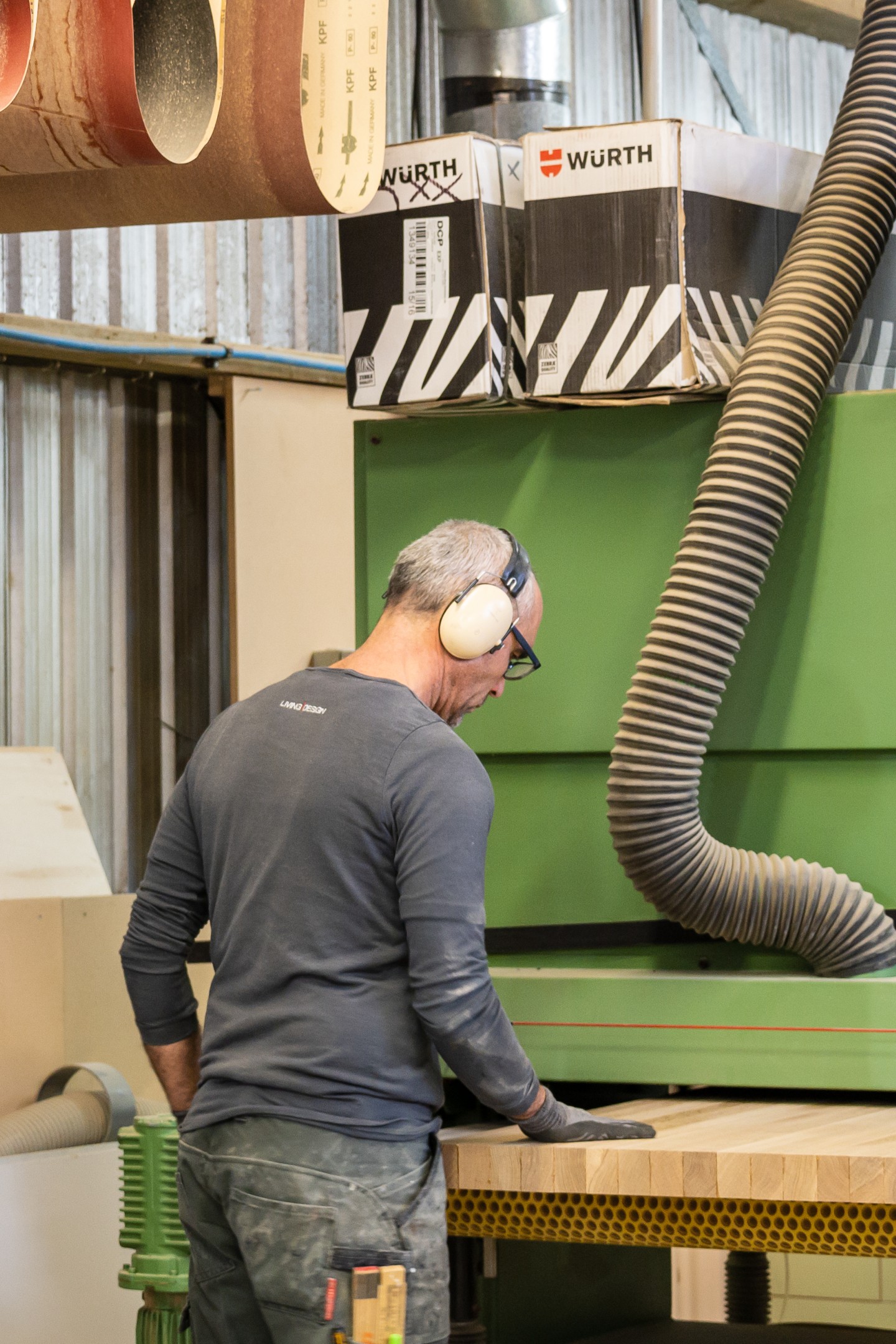
Klaus crafting the Sixteen Pin Chair. Image courtesy of K.TODT Design.

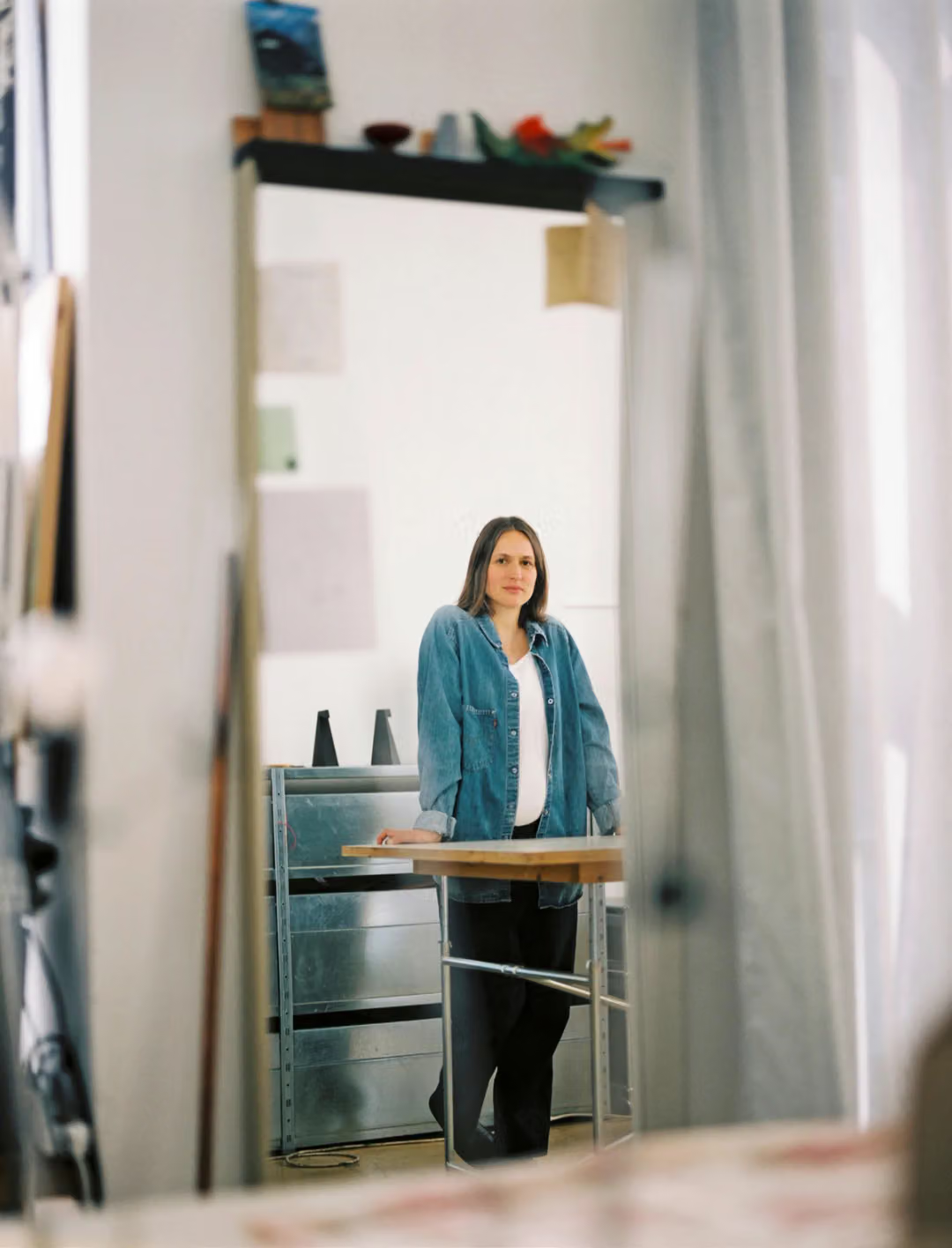
Klaus Todt at Makers Market Edition 3.0. Photography by Robin Smith.