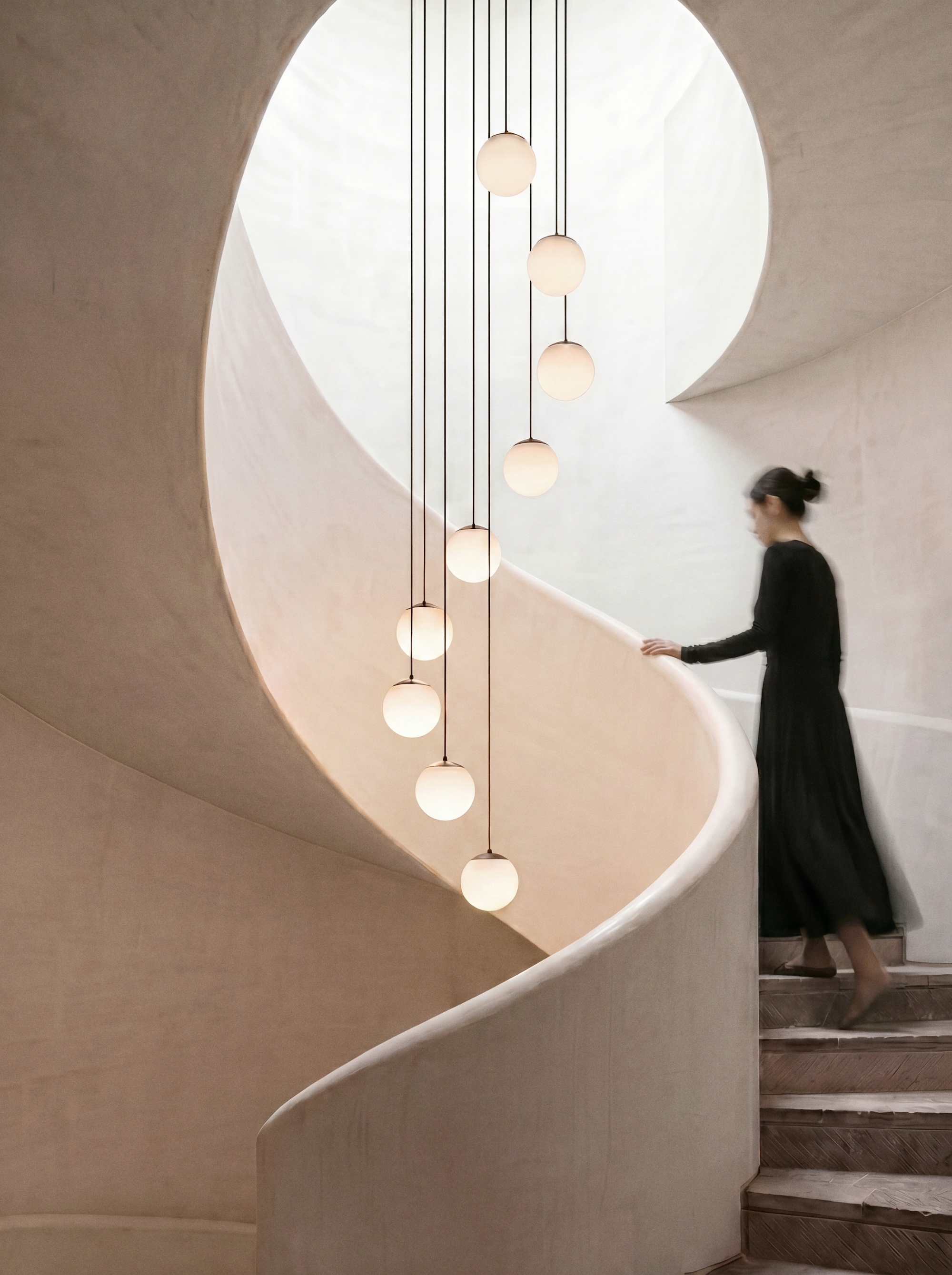
A descending cluster brings a focal point to the open centre of a stairwell. Image courtesy of Astep.
A design that asks you to look up
Some lights are best understood from a seat at the table. Others reveal themselves as you move through a room. Model 2095 belongs to the latter: suspended globes gather into a descending composition, their spacing and overlap changing with your viewpoint.
Gino Sarfatti introduced Model 2095 in 1958, as part of his experimental 2000 series. Developed in the context of architectural commissions, it explored how a group of suspended lights could respond to the space around it. Astep presented its new interpretation at 3daysofdesign in Copenhagen in June 2026, bringing that idea to a contemporary audience.
Sarfatti’s curiosity ranged widely. Through Arteluce, the company he founded in 1939, he developed more than 700 lighting designs, exploring new materials, techniques and ways to use light. His background in engineering helped him combine a clear visual idea with close attention to how an object was made. Model 2095 offers an especially appealing expression of that inventive approach.
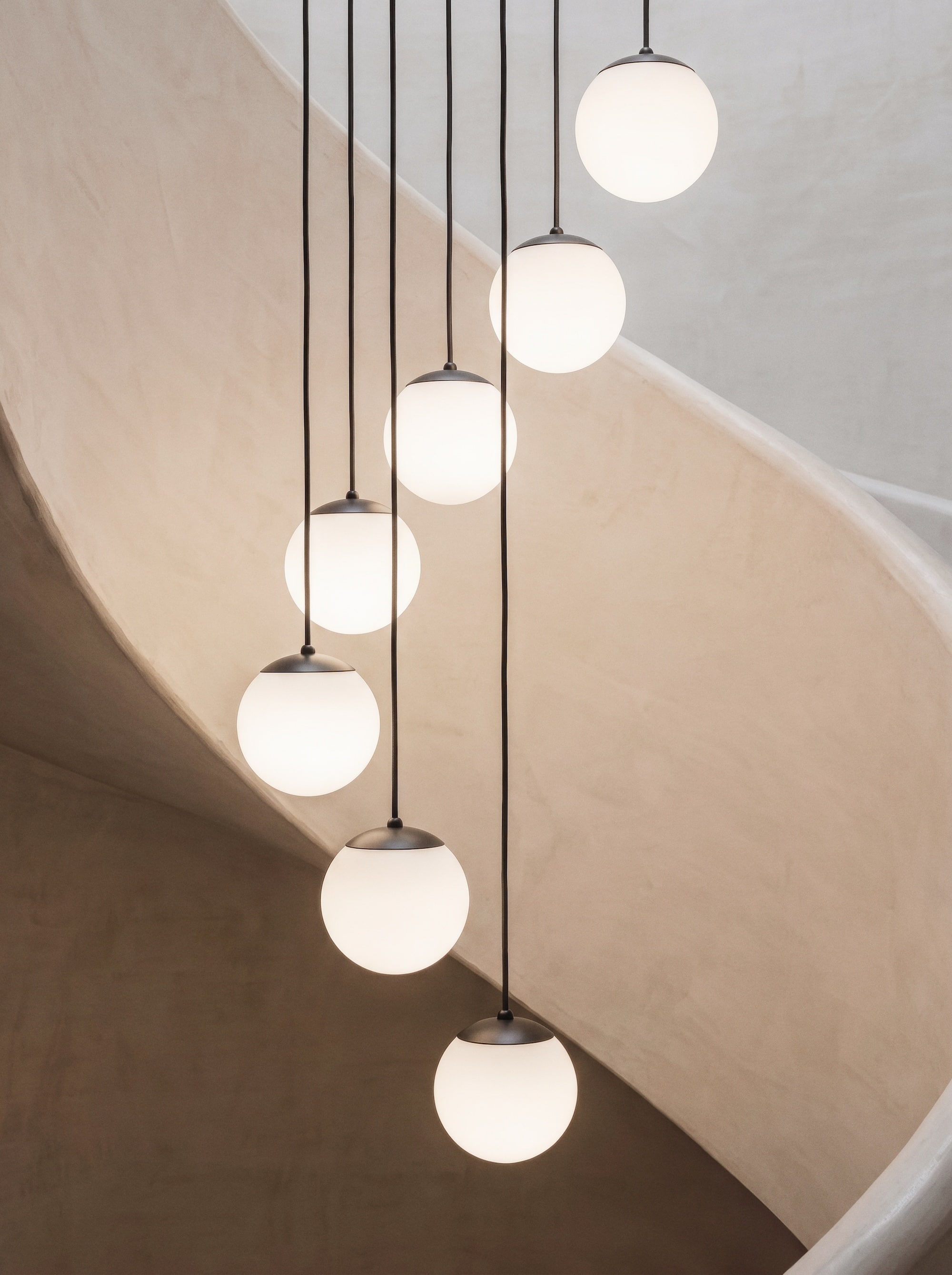
Fine suspension lines give the luminous globes room to stand out. Image courtesy of Astep.
A well-placed light can make the space between floors feel like a room in its own right.
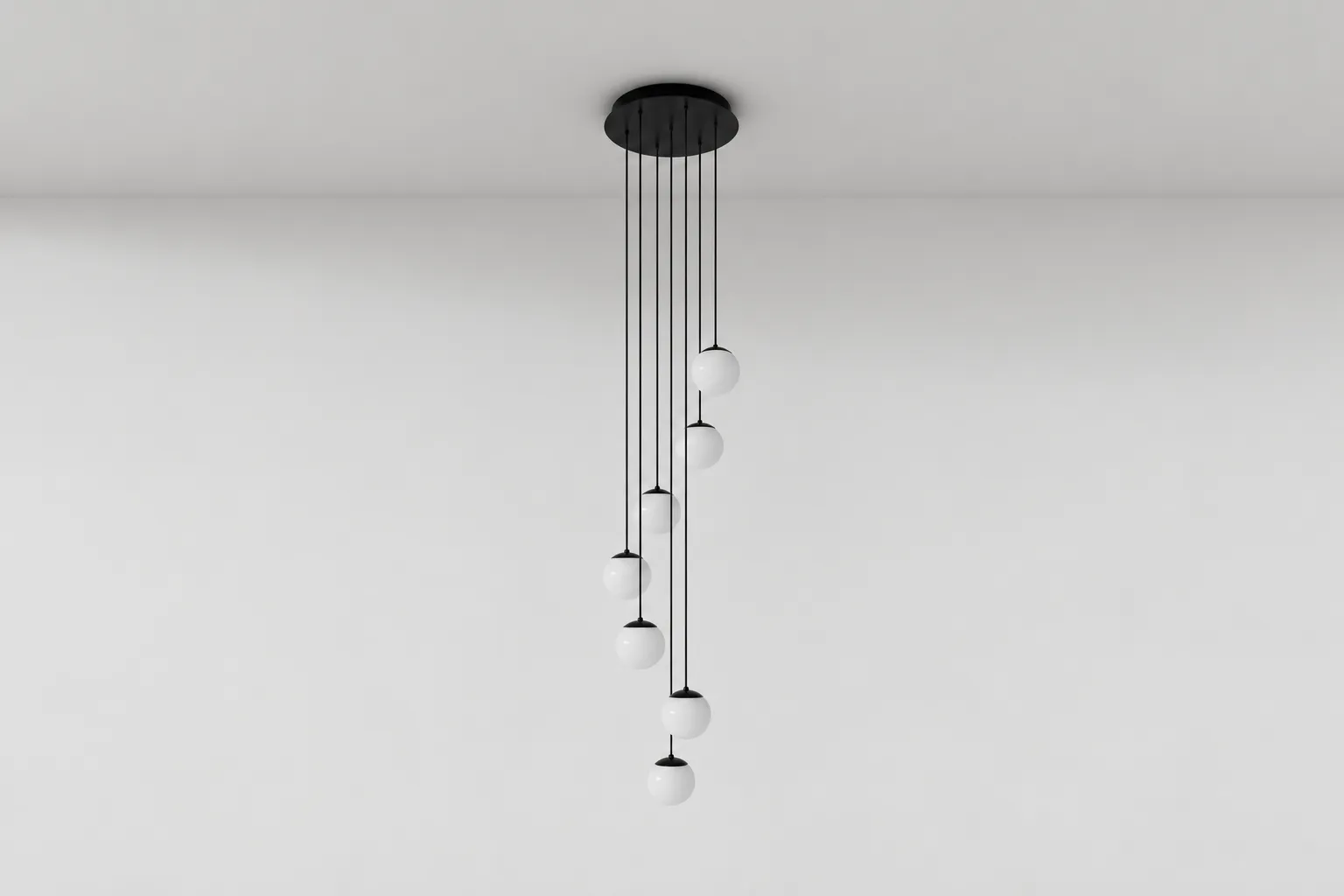
Explore Model 2095 at Good Form and find a composition for your interior, from a single pendant to an expansive cluster.
Glass spheres suspended at different heights give Model 2095 a flowing, vertical rhythm. Designed by Gino Sarfatti in 1958 and reintroduced by Astep, it makes a striking feature in a stairwell or entrance, where the changing composition can be appreciated from several levels.
Choose a single pendant or a cluster of five, seven, nine or twelve spheres. Each glass globe measures 14cm in diameter, with opaline glass creating a softly luminous presence and transparent glass revealing more of the fitting within. Black or champagne structural finishes offer a choice of crisp definition or warmer detailing.
For dining areas, consider a single pendant or a smaller composition; for taller spaces, a cascading cluster can make the most of the room’s height. Talk to Good Form about the configuration, suspension drop and finish that will suit your interior.

Let the architecture lead
In Astep’s pale stairwell imagery, the globes follow the sweep of the stairs while the fine suspension lines emphasise the open height above. The relationship feels particularly satisfying: a curved wall provides a quiet backdrop, and each sphere becomes a distinct point to follow.
Against the warmer, red-toned staircase, the same idea takes on a more dramatic character. We like how the soft globes sit beside the substantial surfaces and sharp folds of the stair. There is enough contrast to make both the light and the architecture more interesting.
For a home, the starting point is the view. Consider how a cluster will appear from the entrance, the landing and the floor below. Leave space around the glass so the individual lights can be read, and plan the overall drop alongside the circulation through the room. A generous void offers an opportunity for a composition that can be enjoyed from several levels.
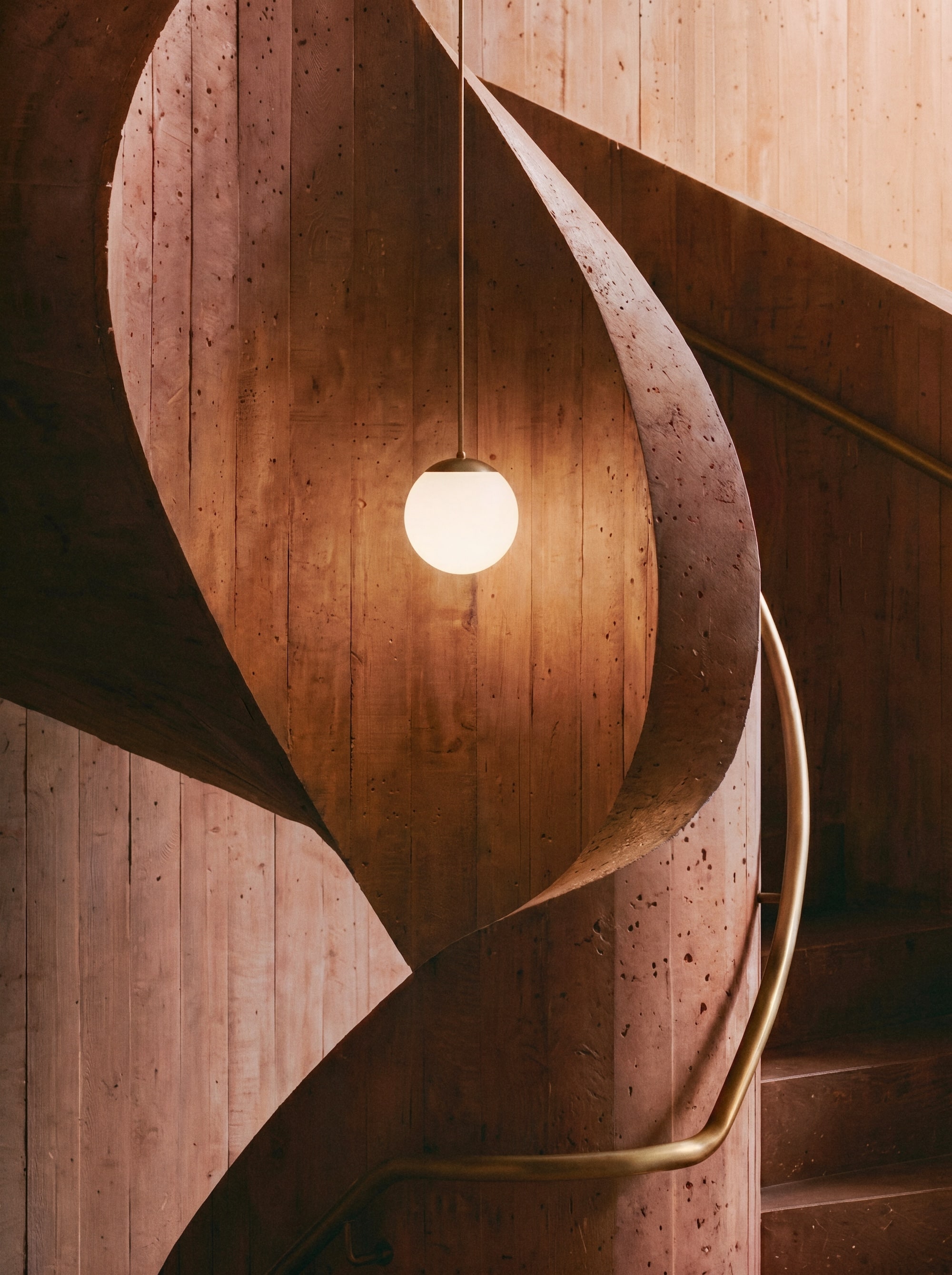
Seen close up, a single globe becomes a quiet counterpoint to the stair’s geometry. Image courtesy of Astep.
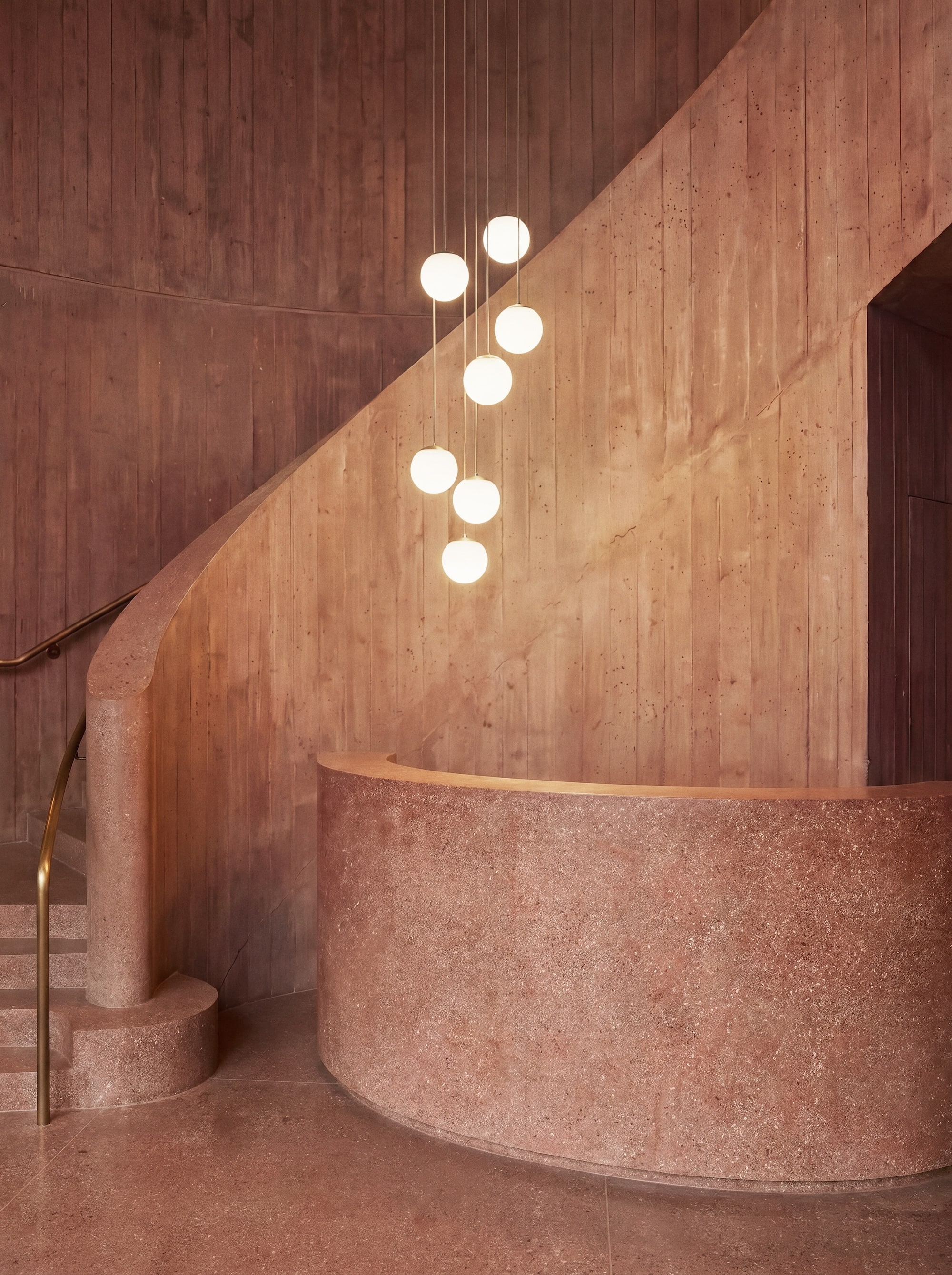
The stair’s substantial surfaces create a strong setting for the illuminated spheres. Image courtesy of Astep.
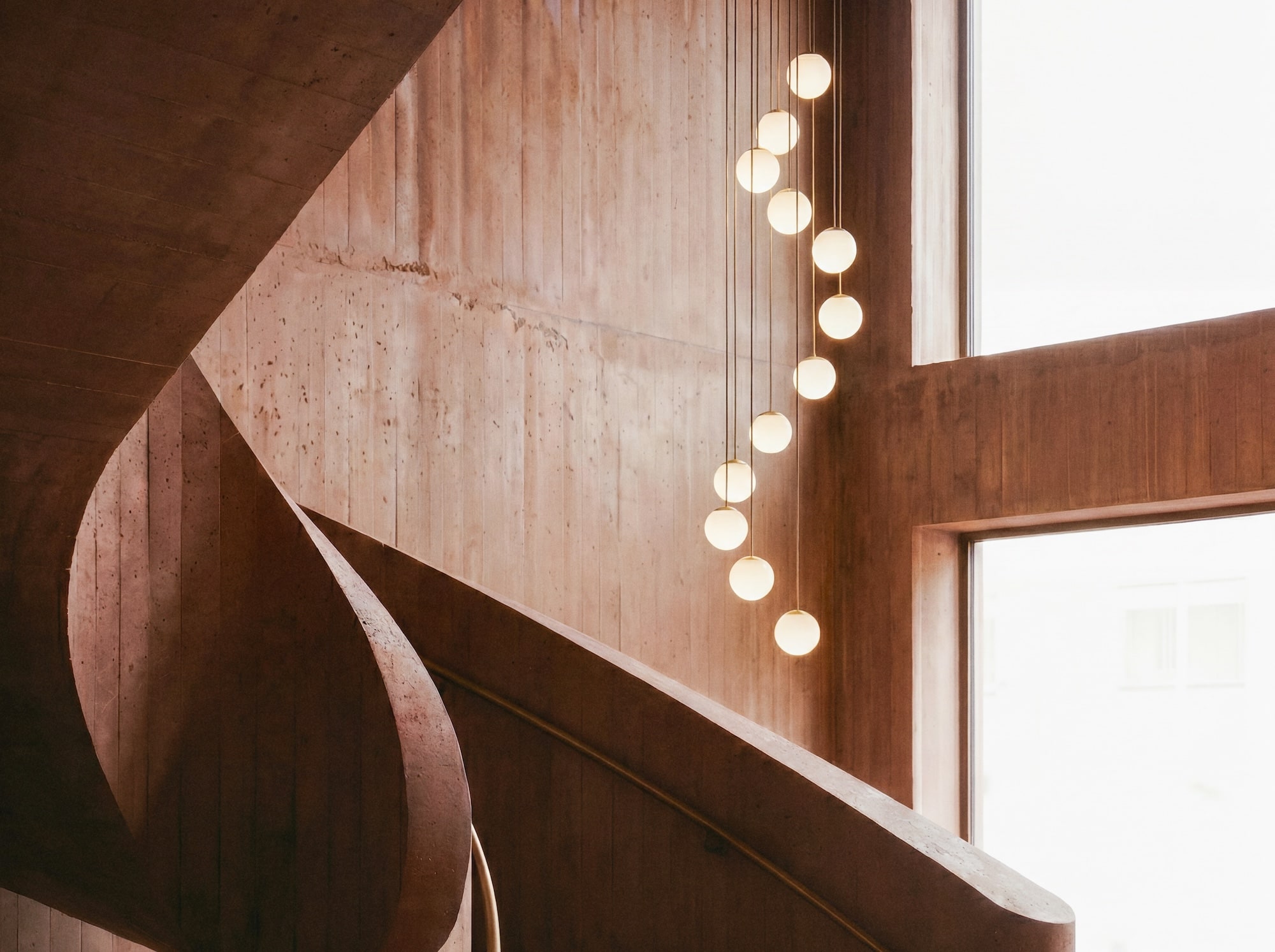
A view across the stairwell reveals the full relationship between the light, window and surrounding architecture. Image courtesy of Astep.
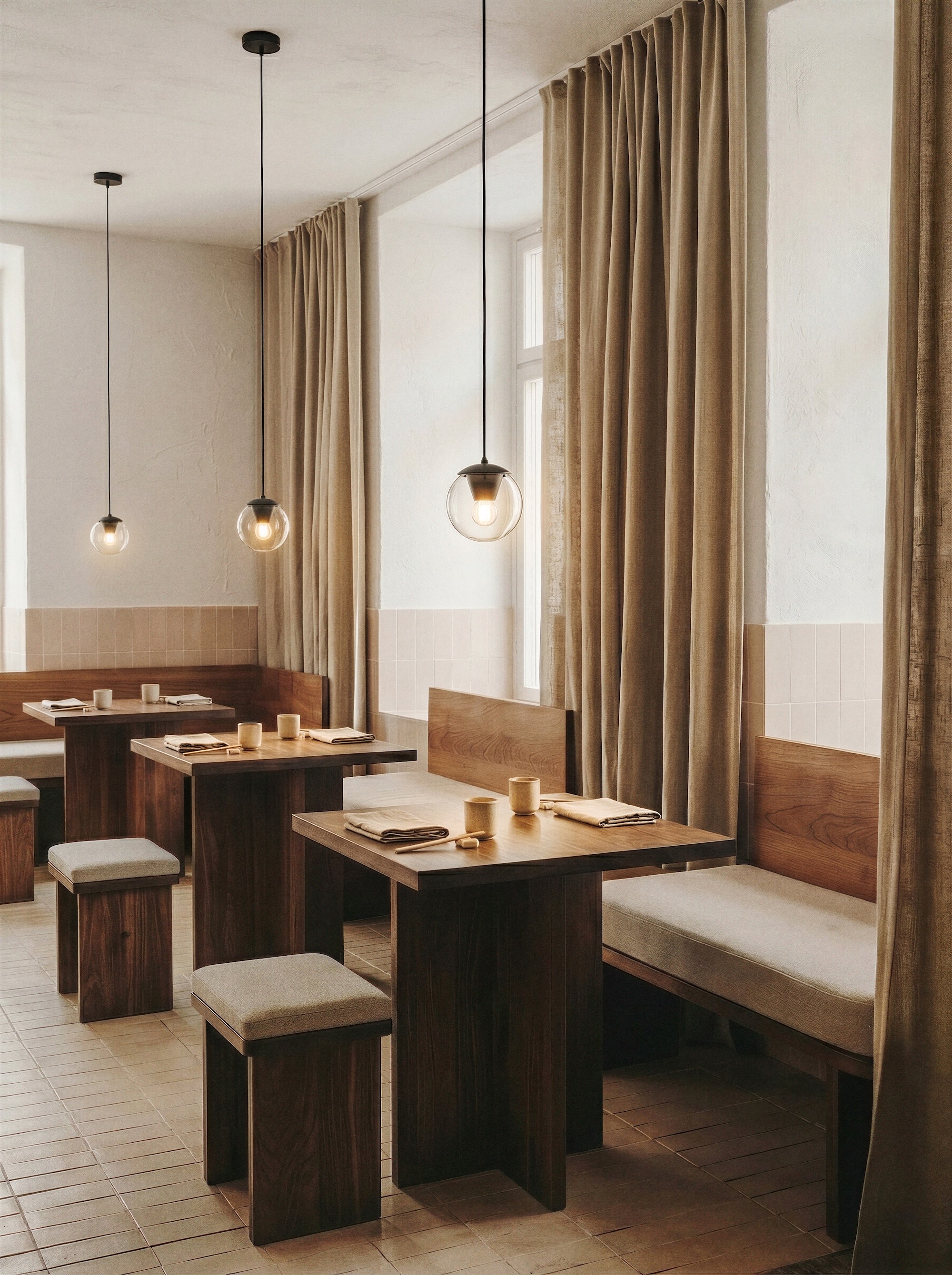
Individual pendants give each restaurant table its own point of light. Image courtesy of Astep.
One sphere, or a gathering of light
Model 2095 is available with 1, 5, 7, 9 or 12 pendants, each with a 14cm glass sphere. Choose opaline or transparent glass, paired with a black or champagne structure. These choices let the design move between a compact accent and a more expansive installation.
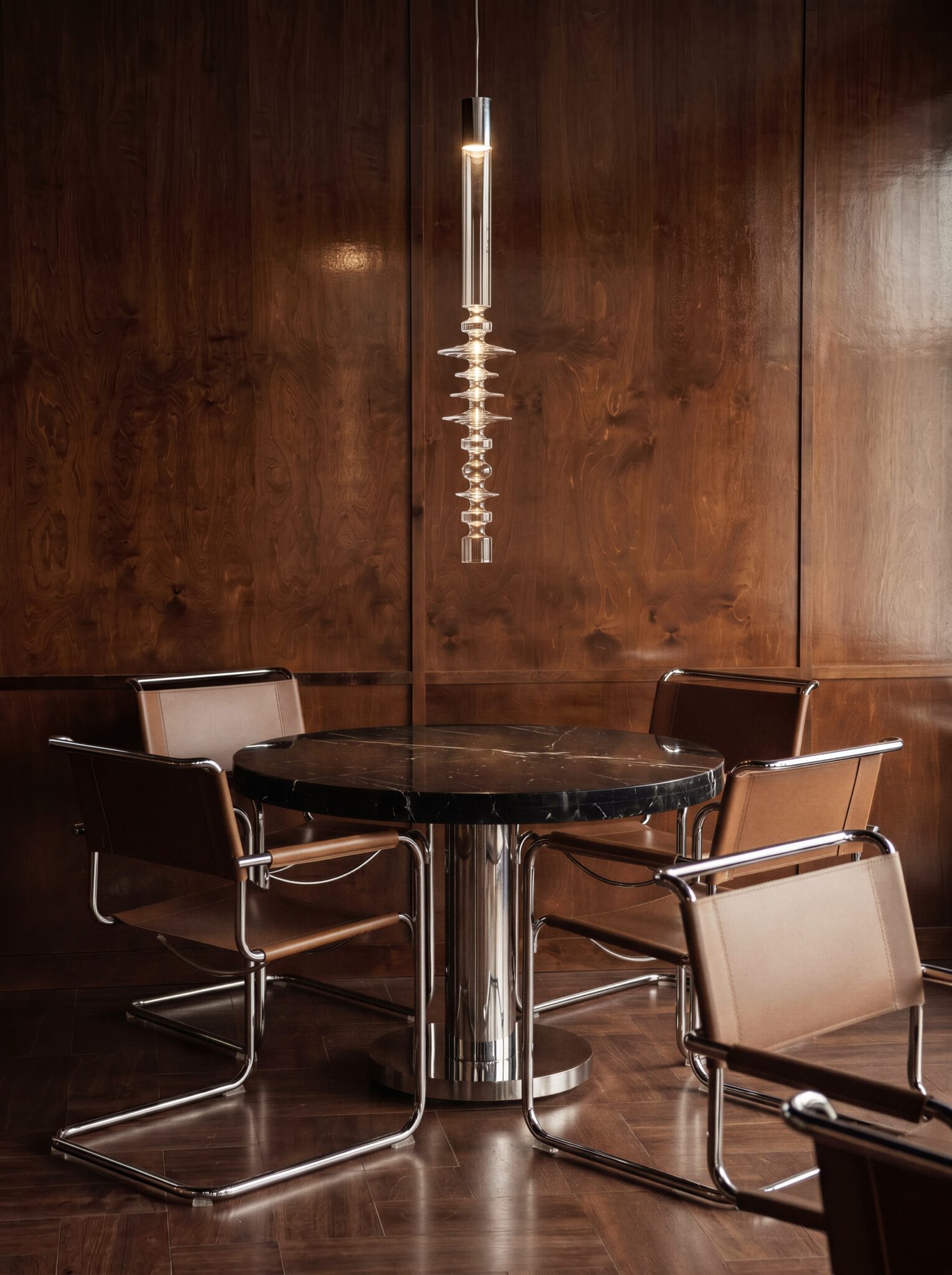
Astep’s restaurant setting shows the quieter possibility. Individual transparent pendants mark the tables, establishing a rhythm through the room without filling the space between them. It is a useful reminder that a small fitting, carefully positioned, can give a setting a strong sense of purpose.
Find the composition for your space
What draws us to Model 2095 is the simplicity of its ingredients. A sphere, a suspension line and the space around them are enough to create a memorable interior. The decisions about scale and placement become part of the pleasure of choosing it.
Explore the Model 2095 Cluster Suspension Lamp or talk to Good Form about configurations, finishes and suspension drops. Read more about its designer in our Gino Sarfatti profile.
Product information and interior imagery courtesy of Astep. Read Astep’s introduction to Model 2095.
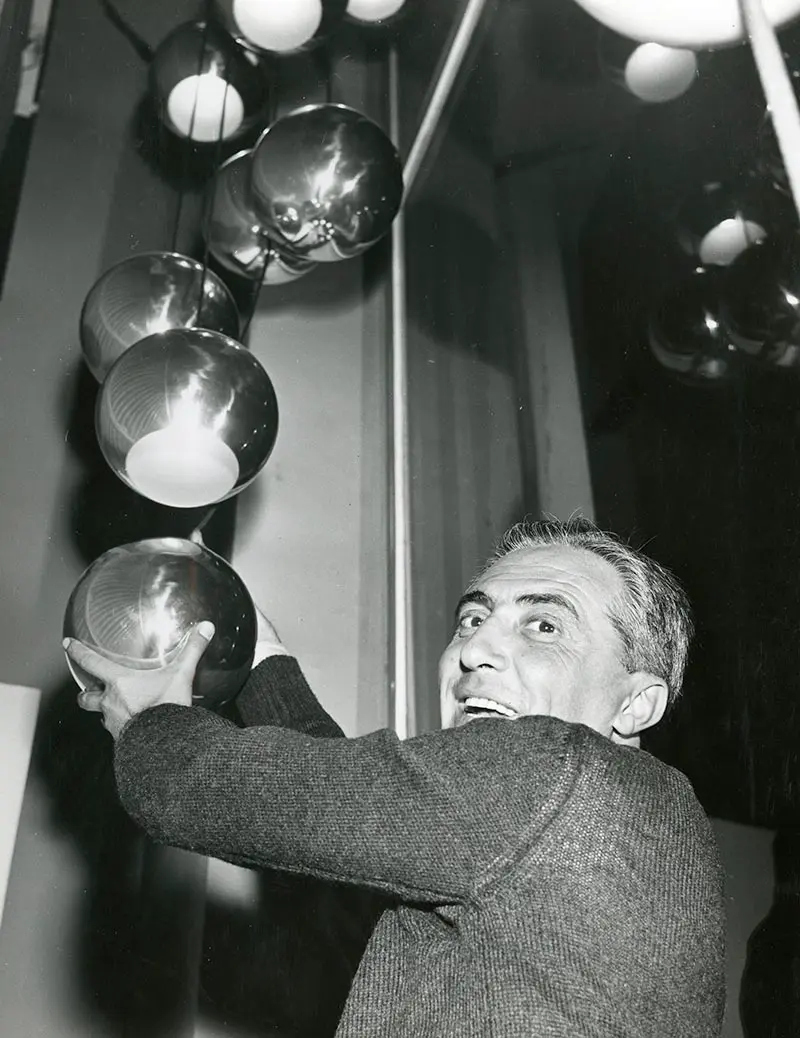
Gino Sarfatti, whose experiments with light continue to inform contemporary interiors.