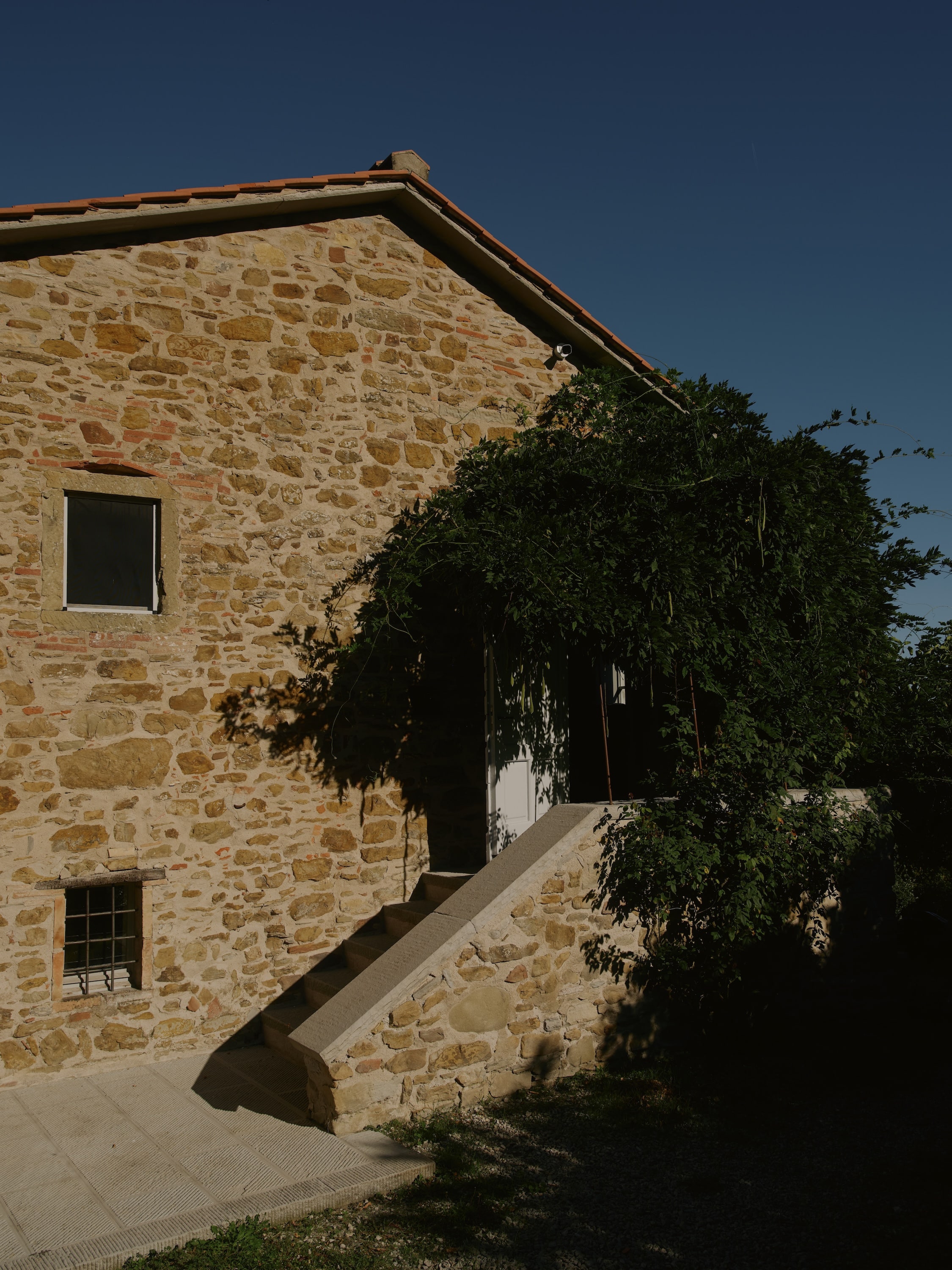
I.05 Anghiari, a Tuscan farmhouse restored by Studio Giacomo Moor. Photography by Omar Sartor, courtesy of Astep.
Some of the most compelling interiors bring several generations of design into the same room. A worn stone floor, a beautifully proportioned timber table and a light designed decades later can feel entirely at ease together. At Good Form, this conversation between vintage and contemporary design is part of what keeps us curious. Astep’s latest project story is a lovely example.
Set on a hill in Tuscany’s Val Tiberina, I.05 Anghiari is a farmhouse built over different periods, with parts dating to the 1300s. Its four staggered levels follow the slope of the land. Studio Giacomo Moor approached the restoration with care for what was already there, restoring terracotta floors, retaining the pietra serena stone of the former stables and finishing the walls with lime-based plaster.
Those decisions give the rooms their depth. Exposed brick edges, substantial beams and uneven surfaces remain visible beside crisp timber joinery and simple furniture. There is space to appreciate the building’s age, and just as much room for a new chapter.

The Model 2050 by Franco Albini and Franca Helg above the dining table. Photography by Omar Sartor, courtesy of Astep.
There is space to appreciate the building’s age, and just as much room for a new chapter.

Designed in 1963 by Franco Albini and Franca Helg, the Model 2050 gives the dining room a generous, softly rounded focal point. Astep’s re-edition brings this Italian lighting classic into contemporary homes.
In 1963, Franco Albini and Franca Helg started experimenting with plastics in lighting for Arteluce. Summoned by Gino Sarfatti to research the possibilities that new technologies and materials were providing, the two designers came up with a suspension lamp that summed up the two souls of the Arteluce brand: the love for glass, which they used for the opal diffuser, and the daring use of methacrylate, a (then new) lighter and more resistant material, perfect to interpret modernity by combining craftsmanship and industry.
With the re-edition of this iconic lamp, Astep continues its work of rediscovery of great Italian masters of light while also pursuing the same pioneering spirit in materials research that animated Albini, Helg and Sarfatti. It does so by bringing environmental sensitivity into the equation through using Green Cast, a material that is 100% recycled and recyclable, patented and made in Italy, featuring identical properties of classic methacrylate. With its brushed finish, the Green Cast used for the new 2050 diffusor restores a timeless elegance. For Astep sustainability is also about guaranteeing performance and aesthetics.

Italian lighting, across generations
The lighting introduces another set of dates into the story. Gino Sarfatti designed Model 262 in 1971. Its circular reflector and mirrored bulb make an unusually direct composition, with each part easy to understand. On the farmhouse walls, its precise geometry sits beautifully beside the irregular texture of the old building.
Above the dining table, Model 2050 reaches further back, to 1963 and the partnership of Franco Albini and Franca Helg. Its broad, rounded shade gives the table a clear centre. We particularly like the relationship between that smooth surface, the terracotta vessel below and the daylight coming through the arched doorway. Each brings a different texture to a very restrained palette.
Astep’s re-edition pairs opaline glass with Green Cast, a recycled and recyclable methacrylate. It is an approach that makes the brand an interesting companion to this restoration: thoughtful design is carried forward, with room for materials and technology to develop.
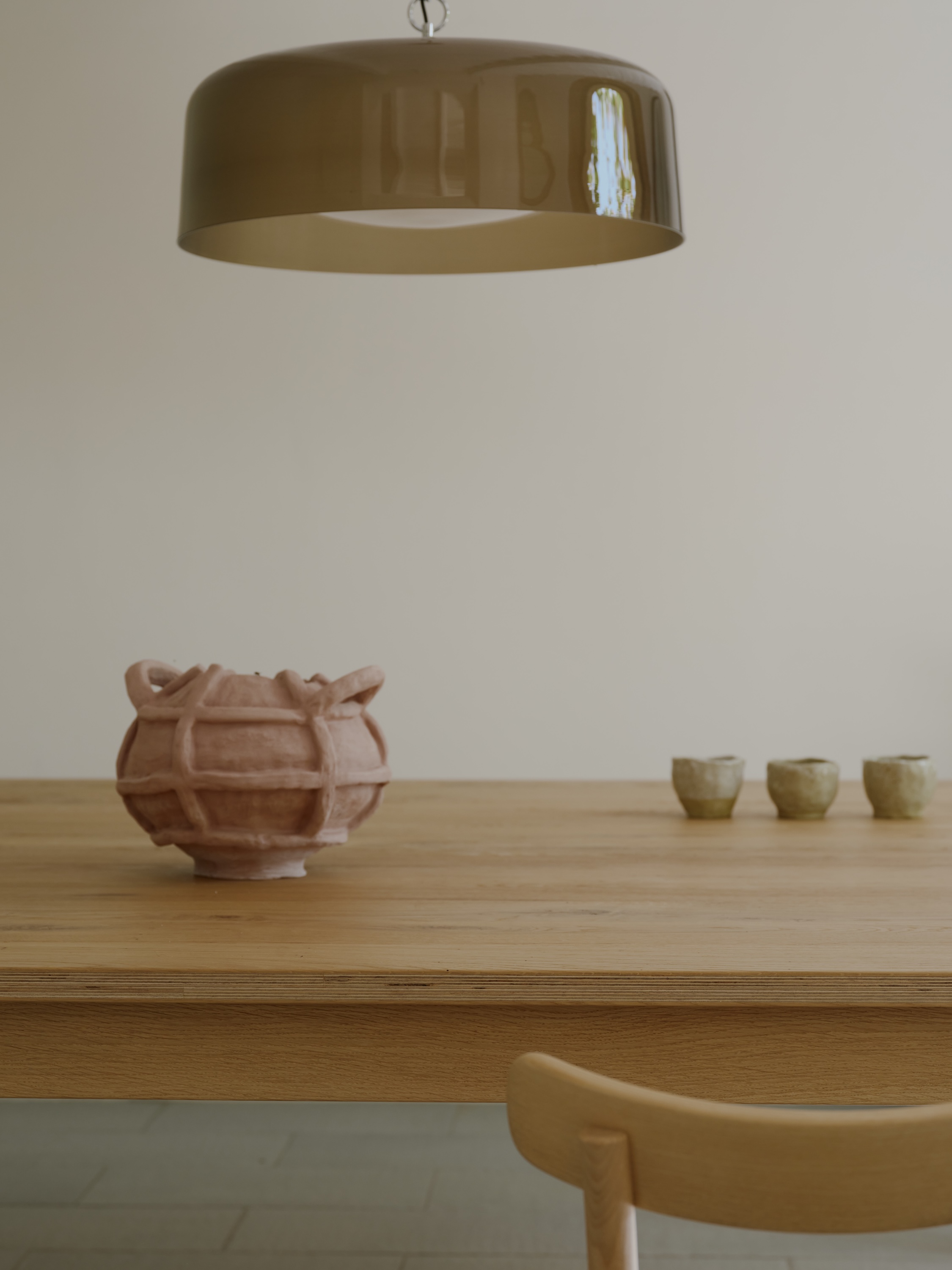
The rounded shade of Model 2050 echoes the warmth of timber and terracotta. Photography by Omar Sartor, courtesy of Astep.
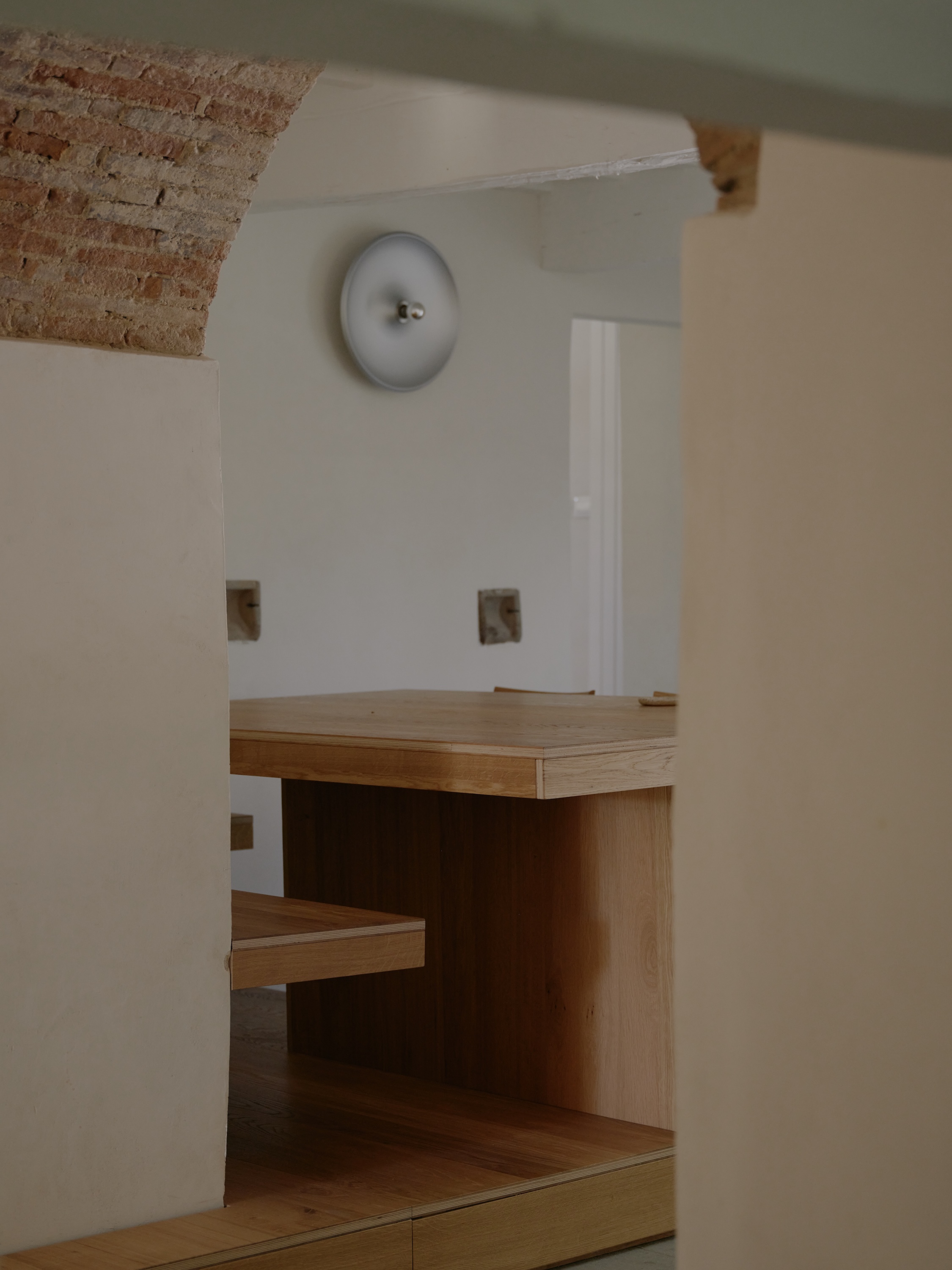
Gino Sarfatti’s Model 262 set against the lime-finished walls and exposed brickwork. Photography by Omar Sartor, courtesy of Astep.
On the farmhouse walls, its precise geometry sits beautifully beside the irregular texture of the old building.
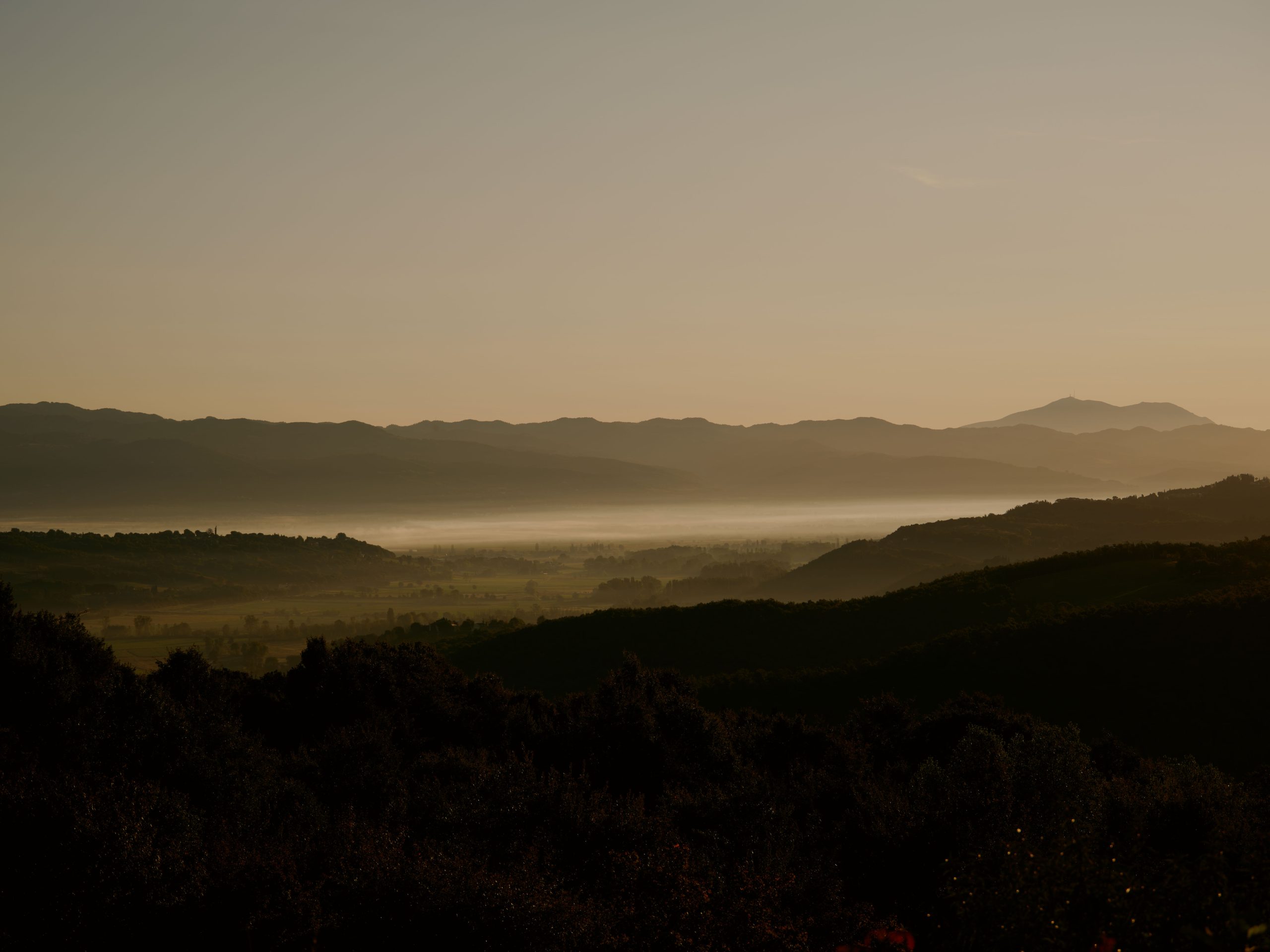
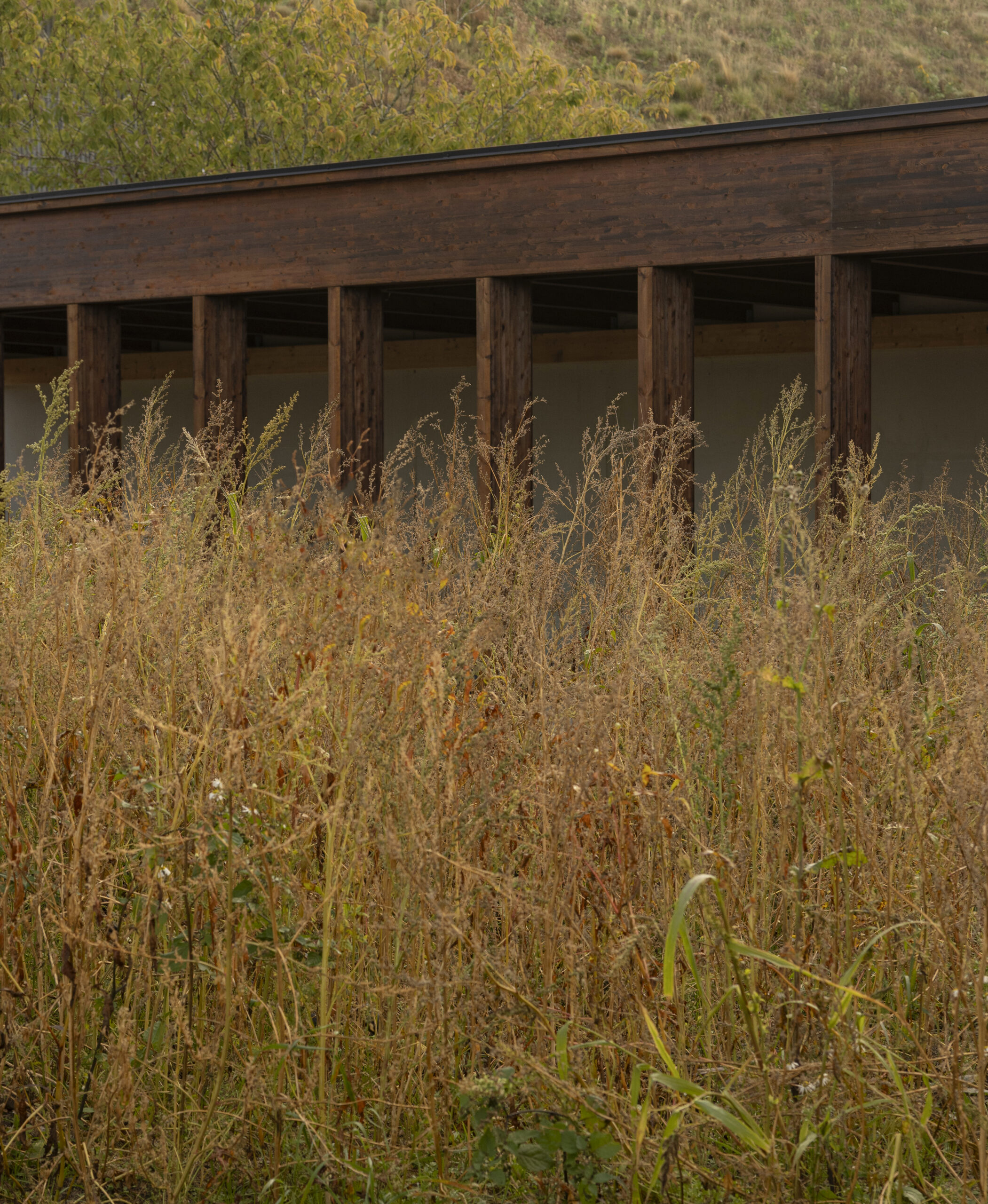
The Tuscan landscape surrounding the farmhouse. Photography by Omar Sartor, courtesy of Astep.
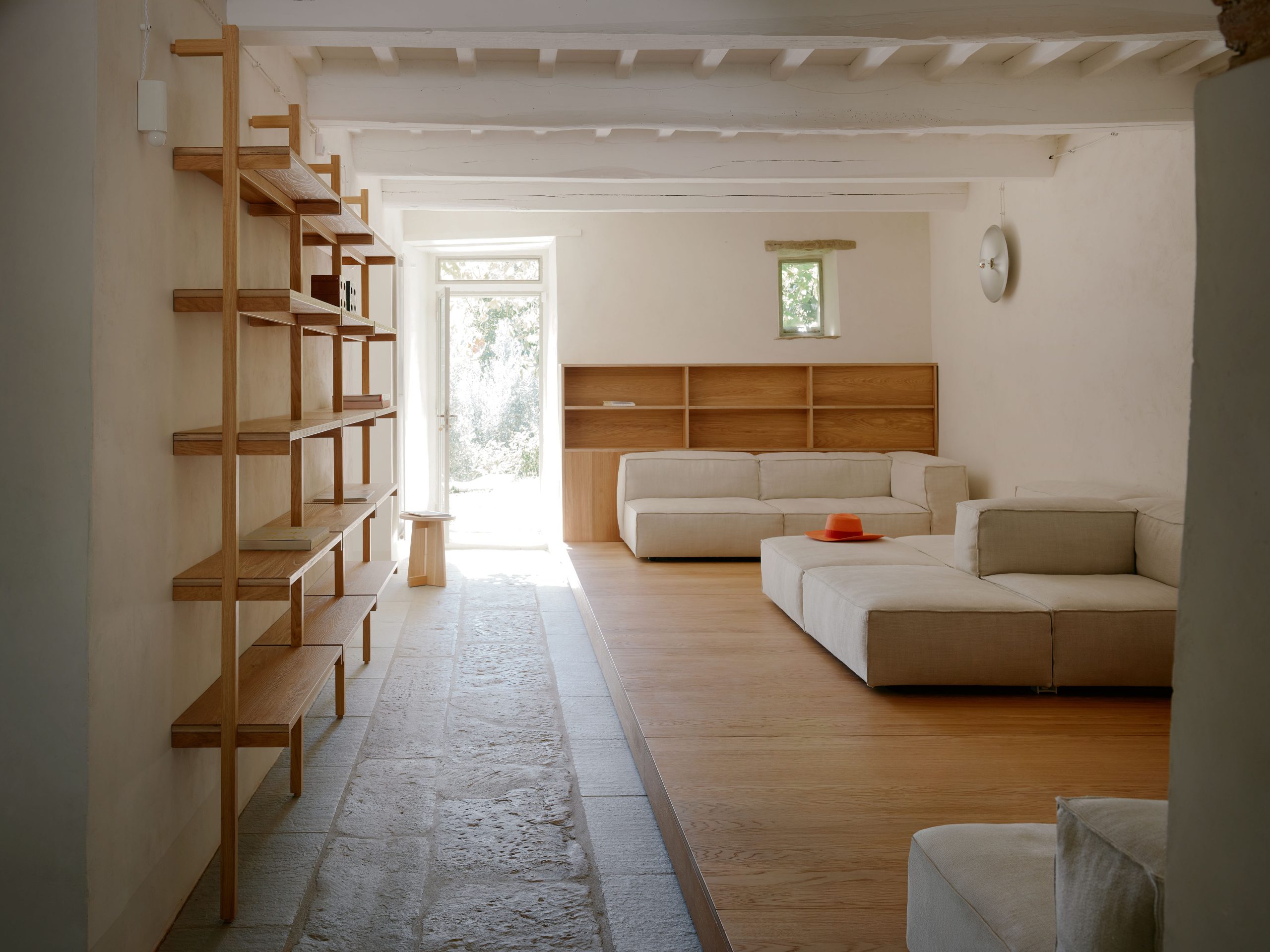
Timber shelving, pale upholstery and a Model 262 wall light in the restored interior. Photography by Omar Sartor, courtesy of Astep.
A little surprise beneath the beams
In the living room, Samuel Wilkinson’s Sorpresa adds a more recent design to the mix. Inspired by a traditional wool winder, its oak frame opens out to support a translucent mesh shade. Beneath the whitewashed beams, the fine structure and soft fabric have an appealing lightness. The timber connects it to the shelving below, while its shape introduces something unexpected.
For us, this is the most useful idea to take home from Anghiari. Pieces from different eras can share a room through their proportions, materials and the way they make it feel. The same thinking can work in an Auckland villa or a contemporary apartment: start with the qualities you love in the space, then choose objects that add to them. A considered light can be one of the most rewarding places to begin.
Explore Astep at Good Form, including Model 2050 and Sorpresa, or talk with our team about lighting for your home. Architecture and interiors by Studio Giacomo Moor. Photography by Omar Sartor. Project and imagery courtesy of Astep; view the original project.
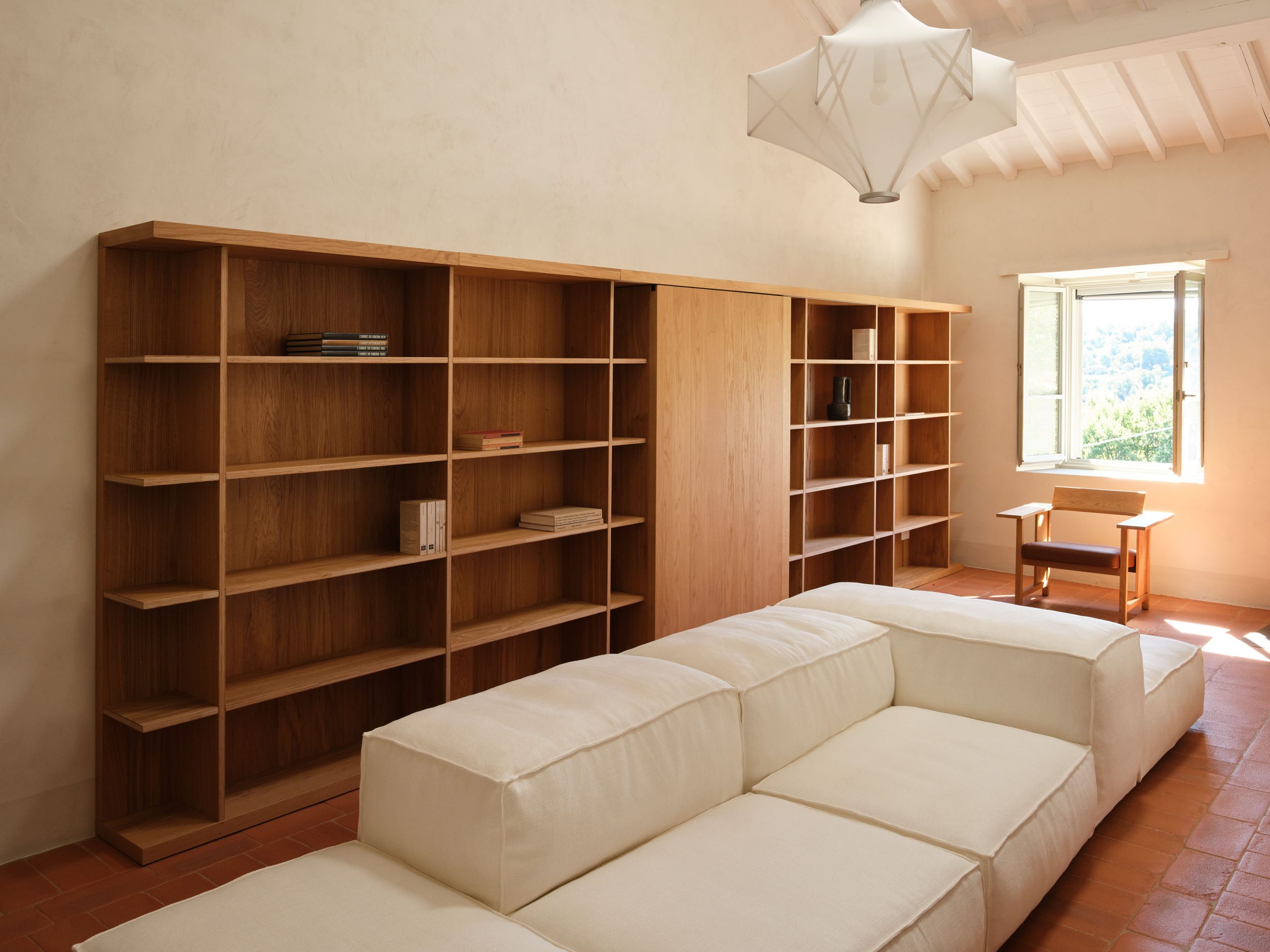
Sorpresa by Samuel Wilkinson brings a light, open form to the living room. Photography by Omar Sartor, courtesy of Astep.
Pieces from different eras can share a room through their proportions, materials and the way they make it feel.
.webp)