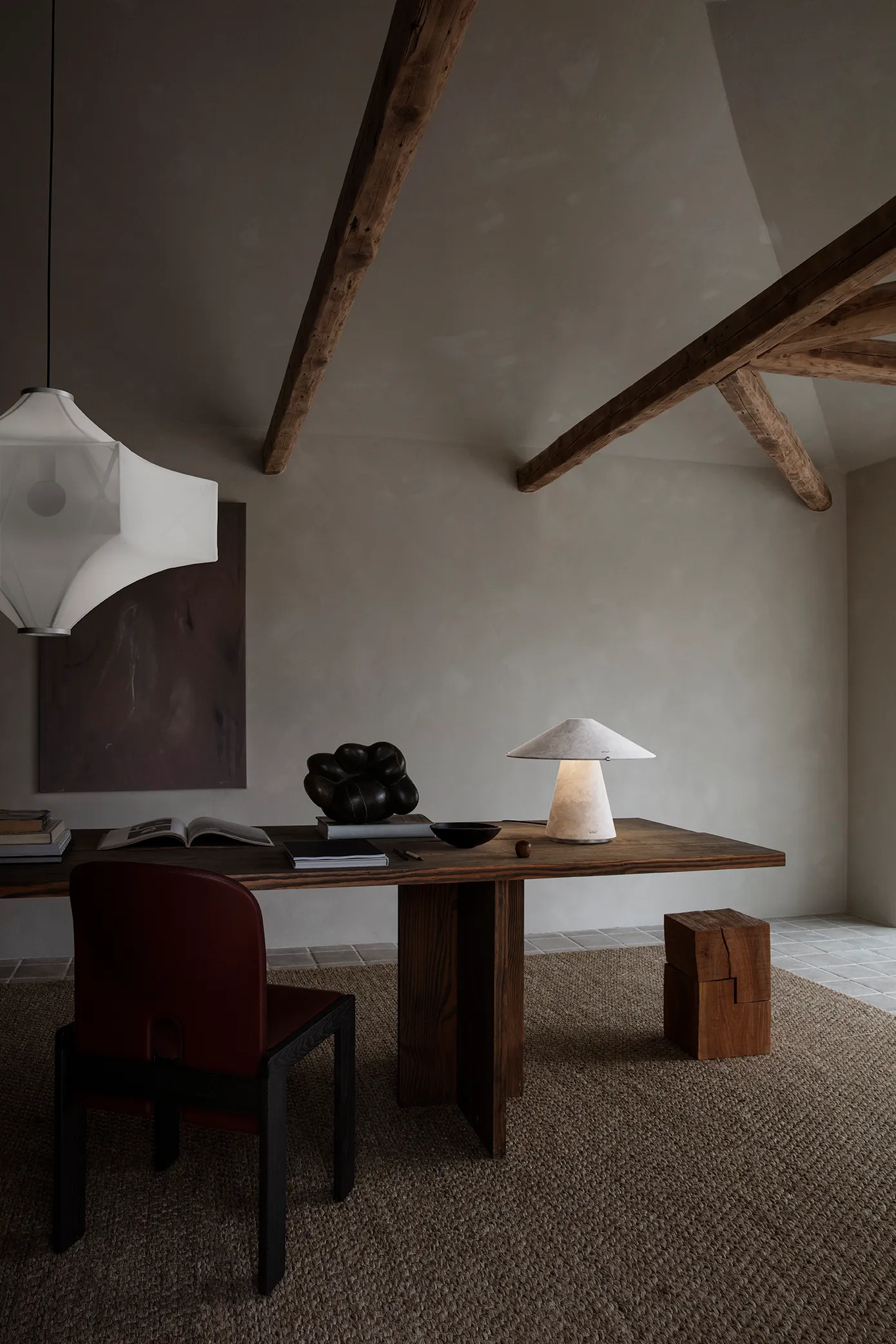
Upglas by Luca Nichetto for Astep. A familiar table-lamp silhouette, realised in reclaimed Murano glass. Image courtesy of Astep.
What if waste is a beginning?
Look closely at Upglas and its surface begins to tell a story. Pale and dark tones drift through the shade and base, forming patterns that recall the veining of stone. The familiar outline of a table lamp gives you an easy place to start; the material invites you to stay a little longer.
That material is reclaimed Murano glass. Designed by Luca Nichetto for Astep, Upglas brings together the Italian designer’s connection to glassmaking and Rehub’s research into new uses for discarded glass. For Nichetto, whose approach was shaped by Murano’s artisans, the project offers another way to work with a familiar material.
What interests us is the design question behind it. Once a material has been set aside, how do you recognise its potential? Upglas begins there, finding both a practical use and a distinctive visual character in the glass that remains.

The green finish brings a vivid note to a restrained bedroom. Image via Nichetto.
A material’s next life can be as compelling as its first.
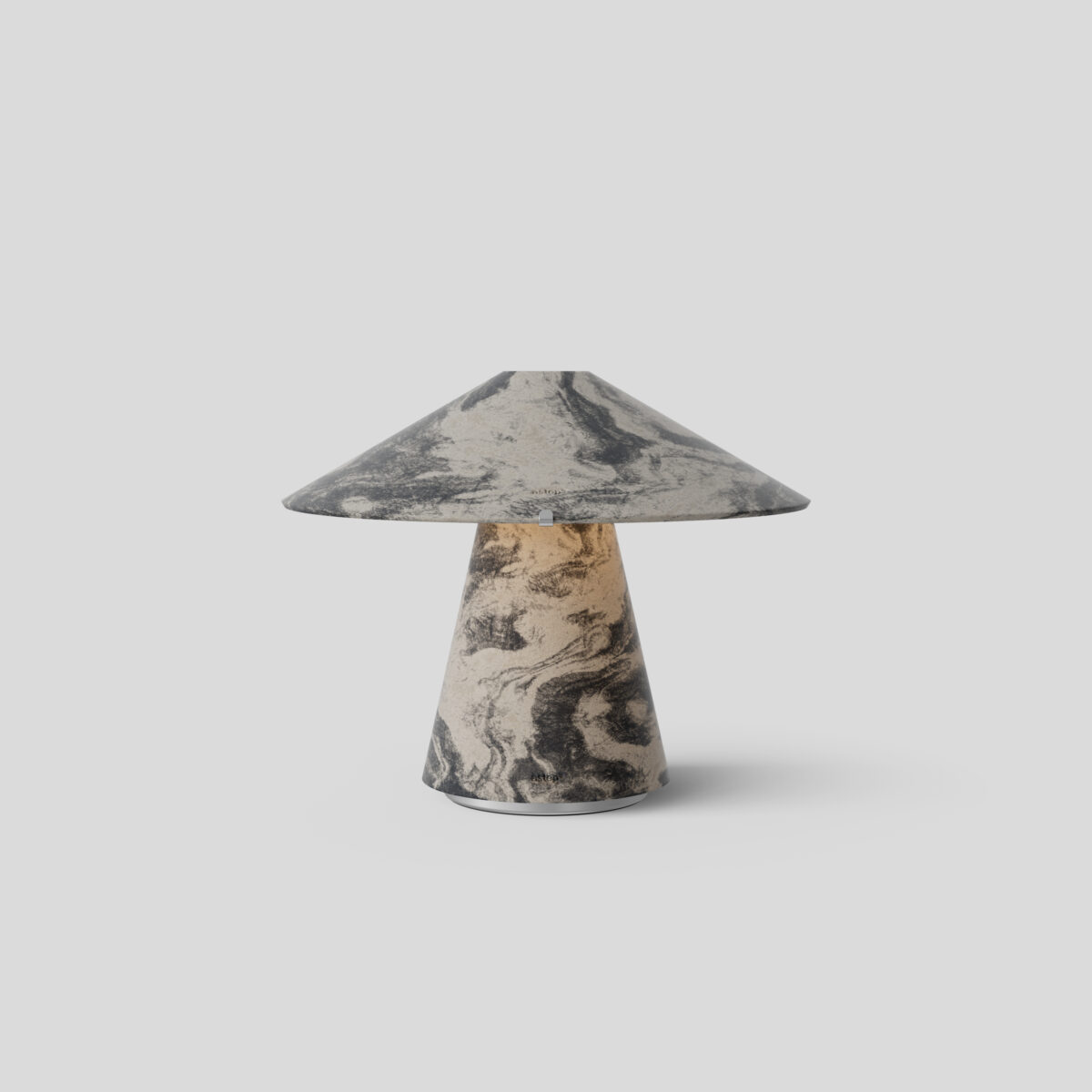
Upglas by Luca Nichetto for Astep pairs richly patterned reclaimed glass with a sculptural silhouette. Explore two forms and four finishes, and find the right combination for your space.
Luca Nichetto's Upglas gives discarded Murano glass a new life. Rehub's upcycling process transforms glass fragments into a tactile, marbled material, giving each lamp its own pattern. The broad T1 and taller T2 forms pair a sculptural glass shade and base with a stainless steel structure. Choose Black, Green, Coral or Pearl (White).

From fragments to a formable material
Rehub’s process changes how the glass can be handled. Fragments are sorted by colour, ground into powder and mixed with a patented biodegradable resin. The mixture becomes a pliable paste that can be worked by hand and shaped in a mould. Nichetto recognised the possibilities of rolling and spreading it, comparing the action to making pizza dough.
Astep reports that the shaped material is heated at around 400°C, compared with the approximately 1,200°C it cites for conventional glass production. The lower firing temperature is one part of a process that gives discarded glass a useful new form.
Nichetto’s sketches and workshop photographs offer a glimpse of the development behind the finished lamp. Drawn outlines become physical forms, with proportions explored through models and prototypes. They reveal the patient work involved in giving an unfamiliar material a convincing shape.

Development models and prototypes make the lamp’s changing proportions tangible. Image courtesy of Nichetto.

Sketchbook studies explore the relationship between shade and base. Image courtesy of Nichetto.
When I first saw this new material, I got the idea of rolling and spreading it by hand
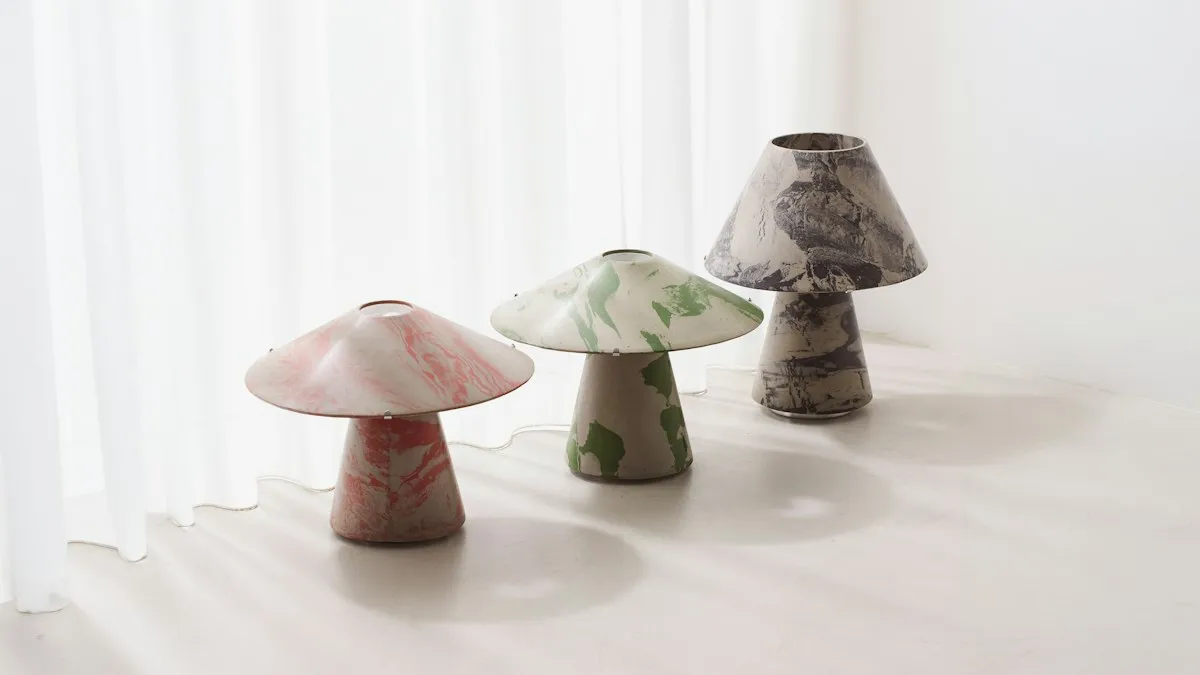
Colour and proportion give the collection a range of expressions, united by the marbled glass. Image via Nichetto.

Detail of Upglas’s patterned surfaces. The variations are part of each lamp’s individual character. Image via Nichetto.
Colour that belongs to the material
The finished Upglas has a smooth, tactile surface with marbling that varies from lamp to lamp. Those differences give each piece its own identity. We like the way the simple silhouette gives the pattern room to be seen: a generous shade, a compact base and colour moving across both.
The collection offers two proportions and four finishes: Black, Green, Coral and Pearl. The broader T1 makes a particularly generous shape beside a sofa or on a console; the taller T2 draws the eye upwards. Against timber, plaster or linen, the patterned glass adds detail without needing a busy setting. Give it a little clear space so the outline and surface can be appreciated together.
A second life worth making
For us, Upglas shows how thoughtfully designed objects can make material reuse desirable. The appeal begins with the lamp itself, and deepens when you discover how it was made. Good design gives us a reason to value the result and to look again at the resources we already have.
Discover the Upglas Table Lamp at Good Form, or explore Luca Nichetto’s designer profile for more about his approach to materials and making.
Design and process information from Astep’s Upglas story and Nichetto’s project feature. Imagery courtesy of Astep and Nichetto.
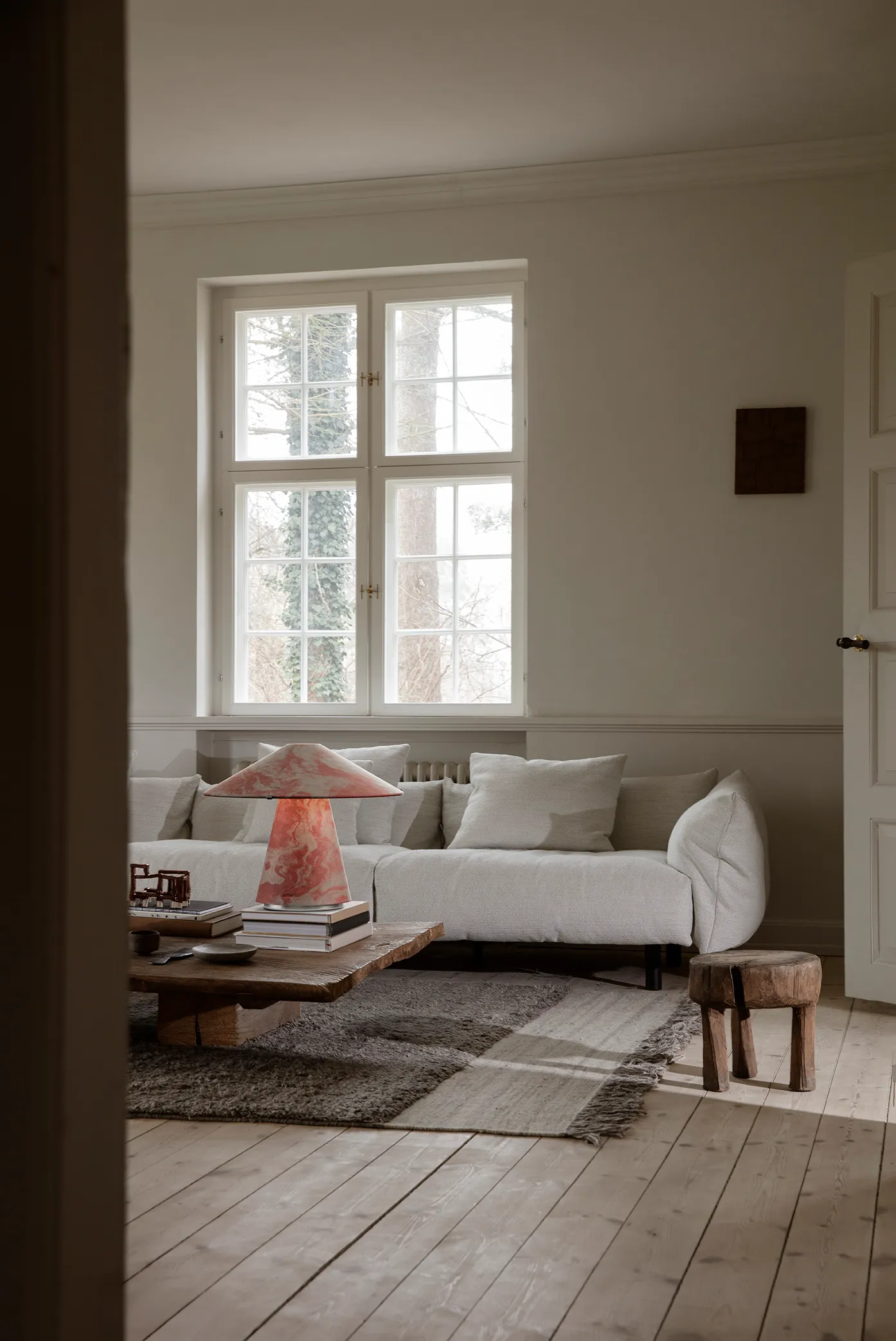
Coral Upglas adds warmth and colour beside a pale sofa and timber table. Image courtesy of Astep.